About Banning Water Damage Restoration
24/7 water damage restoration for Banning and the San Gorgonio Pass, held to the IICRC S500 standard.
Water damage restoration shaped by pass housing
Banning Water Damage Restoration covers emergency water extraction, structural drying, sewage backup cleanup and the documentation an insurance claim needs, across Banning, CA and the neighboring parts of Riverside County.
The work follows the way the city grew: mid-century homes near Downtown Banning and the Ramsey Street corridor, newer tracts added since the 1990s, and homes toward Banning Heights and the Gilman Ranch area that face the San Bernardino Mountains. At about 2,300 feet, the pass sees winter freezes and late-summer storms that low-desert towns rarely get, so the restoration team plans for both.
The dry-out follows the IICRC S500 standard from the first reading to the last. Equipment stays until the structure is verified dry, and every step is logged.
Find us on Google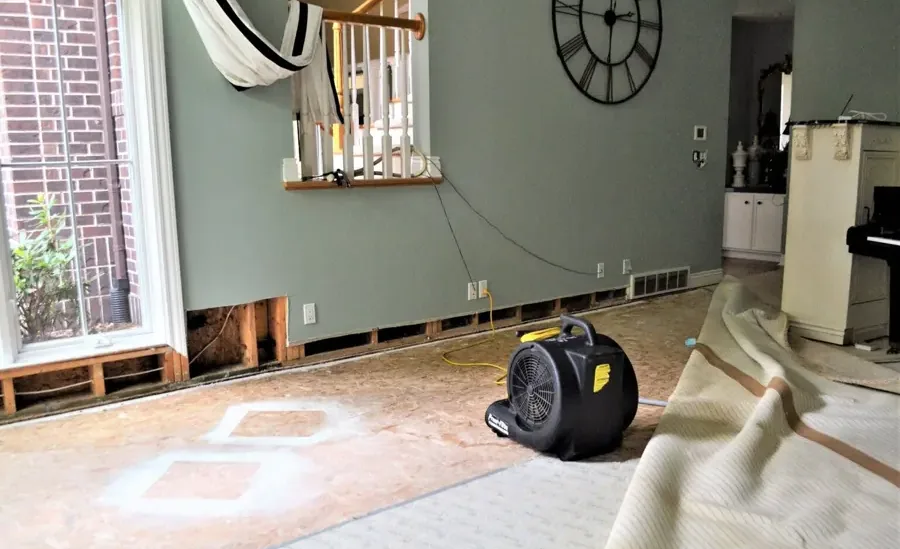
How the work is held to a standard
Moisture mapping before equipment
The tech who does the walkthrough maps what is wet before a single air mover goes down, so the drying plan matches the house.
The category decides the method
Clean, gray and black water are handled differently, and porous materials touched by Category 3 water are removed, not dried.
Equipment stays until the readings say dry
The drying goal is a reading within 2 to 4 points of a dry reference, not a date on the calendar.
Documentation for the claim
Moisture maps, daily logs and timestamped photos go into one file for the homeowner and the adjuster.
How a water loss is handled from the first call
- 1
Moisture mapping first
The tech who does the walkthrough maps what is wet with pinless meters and thermal imaging before any equipment goes down.
- 2
Extraction
The extraction crew pulls standing water with truck-mounted extraction so it leaves the house instead of wicking into the next room.
- 3
Air movers and LGR
The drying team sets air movers to the evaporation load of each room and LGR dehumidifiers to pull the moisture back out of the air.
- 4
Readings until dry
Readings go into the drying log every day, and equipment comes out only when the structure matches a dry reference.
Water on the floor in the pass? Call now.
The restoration team extracts, dries and documents every water loss to the IICRC S500 standard.