Storm and Flood Cleanup in Banning, CA
Storm runoff off the mountains carries mud and debris into garages, patios and living areas. In Banning, the restoration team extracts it, removes what Category 3 water ruined and dries the structure to a verified reading, 24/7.
(888) 563-9619Runoff in the house? Call now- Category 3 handling
- Mud and debris removal
- 24/7 storm crews
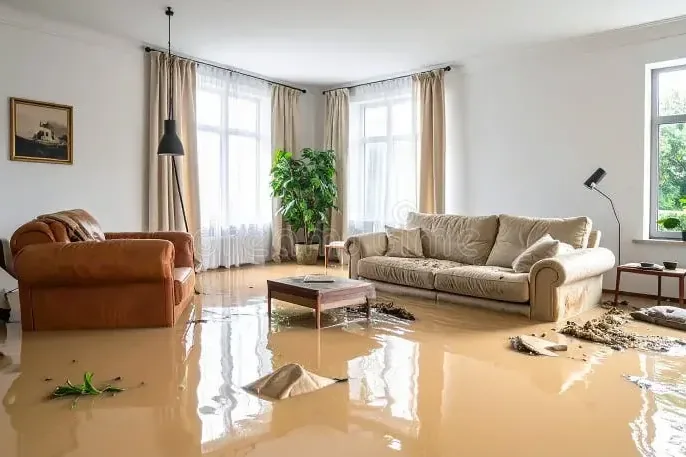
What to do the moment you find storm water inside
- Step 1Stay out of moving water
Never walk or drive through moving water; a few inches can knock a person down.
- Step 2Cut power if safe
Switch off power at the panel only if the panel is dry and you are not standing in water.
- Step 3Photograph the water line
Photograph the water line on walls and every damaged item before cleanup starts.
- Step 4Keep people away
Keep children, pets and older family members out of the muddy water and the wet rooms.
Banning sits in the San Gorgonio Pass between the San Bernardino Mountains and the San Jacinto Mountains, and storm water comes off those slopes fast. The San Gorgonio River runs out of Banning Canyon only after winter storms and snowmelt, and late-summer tropical remnants add sudden downpours: on September 17, 2025, the National Weather Service issued a Flood Watch for the pass as the remnants of Tropical Storm Mario approached, warning of runoff in creeks, low-water crossings and burn scars.
What does storm and flood cleanup cost in Banning, CA?
Storm and flood cleanup typically runs $3,000 to $25,000, set by the depth and spread of the water, the square footage, the material class and how much mud and debris came in. A garage and one room sits at the low end; a whole slab home with drywall cuts throughout sits at the high end.
- Extraction and mud removal
- Carpet and pad removed
- Antimicrobial and drying
- Drywall cut above the water line
- Insulation and baseboards removed
- HEPA air scrubbers and LGR drying
- Every room below the water line
- Containment and debris hauling
- Extended structural drying
The drivers are the water category, the square footage, the material class and how fast drying started. For a planning range, try the water damage cost calculator.
How storm cleanup is handled in Banning
- 1
Safety and documentation
The response team checks power, gas and structure before entry, then photographs the water line on every wall for the claim file.
- 2
Water and mud out
The extraction crew pulls standing water and shovels or squeegees mud off slab floors so the structure can start drying.
- 3
Category 3 removal
The mitigation team removes carpet, pad and drywall below the flood cut and treats surfaces with an EPA-registered antimicrobial.
- 4
Dry and verify
The drying team runs air movers, LGR dehumidifiers and HEPA air scrubbers until readings match a dry reference throughout.
The standard behind storm cleanup
Category 3 from the start, outside runoff
Porous materials below the flood cut come out, not dried
Extraction, HEPA air scrubbers, LGR dehumidifiers
EPA-registered antimicrobial at its dwell time
Why storm water is handled as Category 3 in Banning
Water that flows across yards and streets picks up soil, debris and whatever it passes. Under the IICRC S500 standard it is Category 3 from the start, which means porous materials it touches, such as carpet, pad and the bottom of the drywall, are removed rather than dried, and surfaces are treated with an EPA-registered antimicrobial.
- Garages and patio doors on the uphill side of a lot take water first.
- Mud left on slab floors keeps materials wet and must be removed before drying.
- Rising storm water is usually a flood insurance matter, not a homeowners claim.
What the crew checks after the storm
The response team checks for electrical hazards, gas smells and structural damage before anyone enters, then photographs the water line on every wall. The tech who does the walkthrough sets the cut height from the moisture map. The National Weather Service flood safety page covers staying safe in moving water, and FloodSmart explains how flood insurance claims work.
Cleanup and drying after a pass storm
The extraction crew removes water and mud, the mitigation team removes porous materials below the flood cut, and the drying team runs air movers, LGR dehumidifiers and HEPA air scrubbers. Homes near the river channel and the Gilman Ranch area see runoff first. Water coming through the roof is covered on roof leak water damage, and a backup through the drains on sewage backup cleanup.
Related water damage services
Storm and flood cleanup around Banning
The restoration team covers ZIP 92220 from downtown and the Ramsey Street corridor to Banning Heights, the Gilman Ranch area and the homes along Interstate 10, plus Beaumont and Cabazon next door.
Storm and Flood Cleanup questions
Does Banning really flood?
Storm runoff off the San Bernardino Mountains, the San Gorgonio River after winter storms and late-summer tropical remnants all bring water into low yards, garages and homes. The National Weather Service issued a Flood Watch for the pass on September 17, 2025.
Is storm water dangerous inside a house?
Yes. Outside runoff is Category 3, carrying soil and debris, so porous materials it touches are removed and surfaces are treated with an EPA-registered antimicrobial.
Does homeowners insurance cover storm flooding?
Rising surface water is usually covered only by flood insurance, while wind-driven rain through a damaged roof may fall under a homeowners policy. Coverage depends on your policy, so it is worth checking with your own insurer.
How high is drywall cut after a flood?
Usually above the highest wet reading, often 12 to 24 inches above the water line, so wet insulation and framing can dry.
How long does it take to dry a home after a storm?
Most homes dry in four to seven days after extraction and removal. Mud, dense materials and deep water add time.
Can furniture be saved after storm water?
Hard furniture is often cleaned and saved; upholstered pieces soaked by Category 3 water usually are not.
What does storm cleanup cost?
Most jobs run $3,000 to $25,000. The water damage cost calculator gives a planning range.
Muddy runoff water standing in the garage or inside the house?
(888) 563-9619Ask about the storm runoffStorm water inside a Banning home? Call now.
The extraction crew removes water and mud and the drying team dries the structure to a verified reading.