Hidden Leak Water Damage in Banning, CA
A slow leak inside a wall can run for weeks before it shows as a stain, bubbling paint or a swollen baseboard. In Banning, the restoration team finds the wet cavity with thermal imaging, opens only what is wet and dries it to a verified reading.
(888) 563-9619Stain spreading on a wall? Call- Thermal imaging first
- Controlled, minimal cuts
- Cavity drying to S500
What to do the moment you find a hidden wall leak
- Step 1Stop using the fixture
Stop using the sink, tub or shower on the wet wall until the source is confirmed.
- Step 2Check the water meter
With every fixture off, watch the meter; a moving dial means a supply leak, a still one points to a drain.
- Step 3Empty the cabinet
Empty the sink cabinet or closet so the wet area can dry and be inspected.
- Step 4Photograph the signs
Photograph stains, bubbling paint and swollen baseboards with a date for the claim.
A hidden leak is a slow drip from a supply pipe, a drain or a shower valve inside a wall or cabinet. It never floods a room, so it goes unnoticed while the bottom plate, the drywall and the insulation soak up water day after day. The first signs are small: a paint bubble, a baseboard that pulls away, a musty smell in a closet or a water bill that creeps up. In Banning homes from the city's growth in the 1940s and 1950s, older drain fittings behind tubs are a common source, from the blocks off Ramsey Street to the houses near the Gilman Ranch area.
What does hidden leak water damage cost in Banning, CA?
Hidden leak water damage typically runs $900 to $6,500, set by how long the leak ran, the square footage of wet wall, the material class and whether cabinets or flooring are involved. A small wet cavity caught early sits at the low end; weeks of drain water under a vanity sits at the high end.
- Thermal scan and pin meter readings
- Small controlled wall opening
- Cavity drying, three to four days
- Swollen cabinet base removed
- Wall bottom and insulation removed
- Air movers into the cavity
- Category 2 cleaning of the cavity
- Flooring near the wall lifted
- Extended drying of framing
The drivers are the water category, the square footage, the material class and how fast drying started. For a planning range, try the water damage cost calculator.
How hidden leak drying is handled in Banning
- 1
Scan and confirm
The tech who does the walkthrough scans the wall with a thermal camera and confirms every suspect patch with a meter before anything is cut.
- 2
Small, measured openings
The mitigation team cuts drywall only to the wet edge on the map, bagging wet insulation and photographing each opening.
- 3
Clean if needed
Drain leaks are Category 2, so the crew cleans the cavity and treats it with an EPA-registered antimicrobial before drying.
- 4
Cavity drying
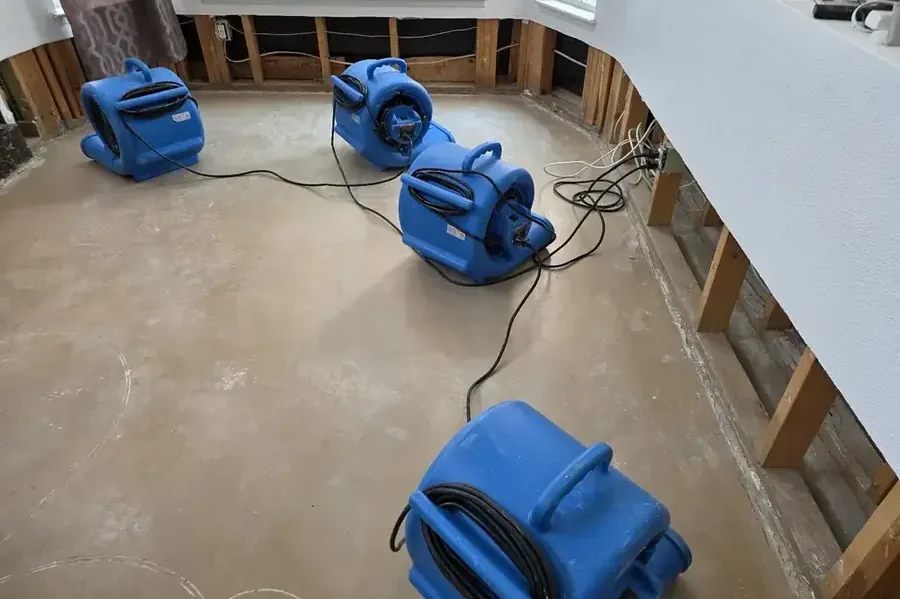
The drying team runs air movers into the opened wall, which dries faster in the dry air of the San Gorgonio Pass once the house is closed, and logs readings daily until the framing matches a dry reference.
The standard behind hidden leak drying
Category 1 from supply pipes, Category 2 from drains
Class 3 or 4 when framing stays wet for weeks
Thermal camera, pin meters, cavity drying kit
Framing readings within 2 to 4 points of dry
Why slow leaks do more damage than they look like
A slow leak keeps materials wet for weeks, so the damage is deep even when the stain is small. Particleboard cabinet bases swell, drywall loses strength at the bottom, and wood framing holds moisture well past the surface. Under the IICRC S500 standard, a long-wet cavity can be Class 3 or 4, which takes more equipment days than a fresh spill.
- Drain leaks carry Category 2 water and need cleaning as well as drying.
- Leaks behind showers often wet the wall on the other side first.
- Cabinet bases made of particleboard rarely recover once they swell.
Finding the wet cavity before anything is cut
The tech who does the walkthrough scans the walls with a thermal camera, confirms each cool patch with a pin meter and marks the wet area on the moisture map. That map keeps cuts small: the mitigation team opens drywall only as high and as wide as the readings show. The EPA WaterSense program explains how to check a meter for hidden leaks, and the EPA flood cleanup advice covers indoor air after water damage.
Drying the opened wall in a Banning home
Once the plumber repairs the leak, the drying team directs air movers into the opened cavity and runs a dehumidifier in the closed room. Readings are logged every day. A leak that started under the floor is handled on slab leak water damage, and larger wet areas get full structural drying.
Related water damage services
Hidden leak water damage around Banning
The restoration team covers ZIP 92220 from downtown and the Ramsey Street corridor to Banning Heights, the Gilman Ranch area and the homes along Interstate 10, plus Beaumont and Cabazon next door.
Hidden Leak Water Damage questions
How can I tell if there is a leak inside a wall of a Banning home?
Bubbling paint, a stain that grows, a baseboard pulling away, a musty smell or a water meter that moves with every fixture off. Thermal imaging confirms the wet area without opening the wall.
Will the whole wall have to be removed?
Usually not. The mitigation team opens only the wet section shown on the moisture map, often just the bottom of the wall.
How long does a hidden leak take to dry?
A small cavity often dries in three to four days once opened. Framing that stayed wet for weeks takes longer.
Is a hidden leak covered by insurance?
Policies often treat long-term seepage differently from sudden damage. Coverage depends on your policy, so it is worth checking with your own insurer.
Why does a slow leak smell musty?
Materials that stay wet start to support mold growth within 24 to 48 hours, and a musty smell means the cavity has been wet for a while.
Who repairs the leaking pipe or drain?
A plumber repairs the source. The restoration team dries and documents the water damage around it.
Paint bubbling, a swollen baseboard or a musty smell in the closet?
(888) 563-9619Ask about the damp wallHidden wall leak in Banning? Call now.
The tech who does the walkthrough finds the wet cavity with thermal imaging and the drying team dries it to a verified reading.