Slab Leak Water Damage in Banning, CA
A pressurized pipe leaking under the concrete soaks flooring, baseboards and wall bottoms from below. In Banning, the restoration team maps the wet slab, lifts what traps the water and dries the concrete to a verified reading, 24/7.
(888) 563-9619Warm spot on the floor? Call now- Thermal imaging of the slab
- Floor drying mats and LGR
- Readings logged for the claim
What to do the moment you find a slab leak
- Step 1Close the main shutoff
Shut the main valve to stop the pressurized pipe from feeding more water under the floor.
- Step 2Check the water meter
With every fixture off, watch the meter; a moving dial confirms a leak on the pressure side.
- Step 3Turn off the water heater
If the warm spot points to hot water, switch the heater off at its power or gas control.
- Step 4Photograph and clear the floor
Photograph the stains and warm spots, then move rugs, furniture and boxes off the wet area.
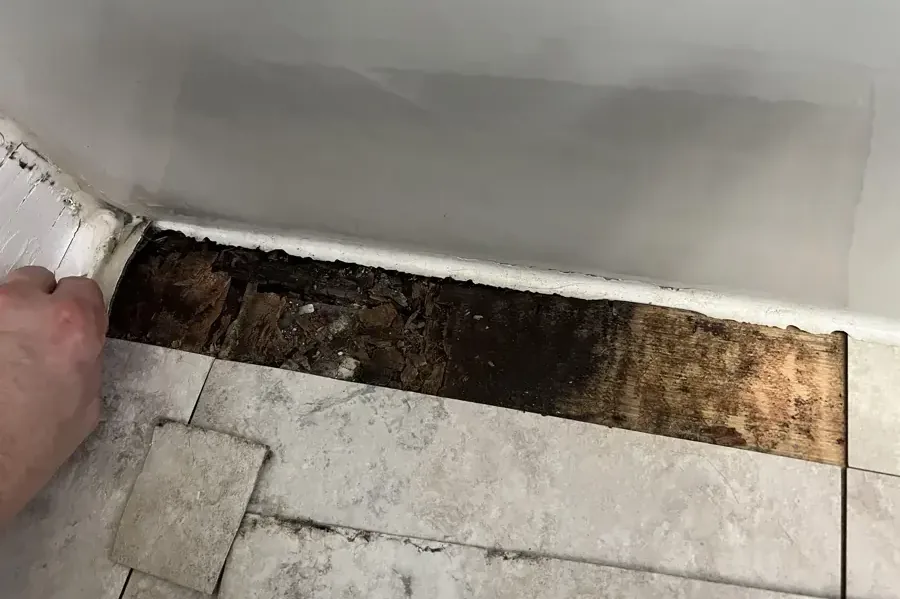
A slab leak is a supply or hot water pipe leaking inside or under the concrete floor. The water has nowhere to go but up and sideways, so it surfaces as a warm spot, a damp grout joint, a cupped plank or a baseboard that swells at the bottom. Banning homes built on slabs across the pass, from the older blocks near Ramsey Street to the tracts along Interstate 10, all share that weakness: the plumbing runs where nobody can see it.
What does slab leak water damage cost in Banning, CA?
Slab leak water damage cleanup typically runs $1,800 to $9,000, set by how much flooring traps the water, the square footage of wet slab, the material class and how long the leak ran before anyone found it. The pipe repair itself is billed separately by the plumber.
- One room or hallway of wet slab
- Floor mats and LGR drying
- Baseboards removed for wall drying
- Flooring that traps water removed
- Wall bottoms opened where readings show water
- Five to seven days of readings
- Several rooms of saturated concrete
- Desiccant drying for Class 4 materials
- Cabinet bases and wall cavities dried
The drivers are the water category, the square footage, the material class and how fast drying started. For a planning range, try the water damage cost calculator.
How slab leak drying is handled in Banning
- 1
Moisture map
The tech who does the walkthrough scans the floor with a thermal camera, then confirms each warm or cool patch with a meter before marking the wet footprint.
- 2
Controlled removal
The mitigation team lifts only the flooring and baseboards that trap water, photographing each step so the adjuster can match removal to the readings.
- 3
Slab and wall drying
The drying team sets floor mats over the concrete, air movers along the wall bottoms and LGR dehumidifiers sized to the closed-up house.
- 4
Verified dry
Daily readings go into the drying log, and the equipment comes out only when the slab matches a dry reference in an unaffected room.
The standard behind slab leak drying
Clean supply water at the start, rechecked if it sits for days
Class 4 once the concrete and bottom plates are saturated
Floor drying mats, LGR dehumidifiers, desiccants for long leaks
Readings within 2 to 4 points of a dry reference slab
Why slab leaks are slow to show and slow to dry
Concrete soaks up water and gives it back slowly. By the time a stain appears, the slab under carpet, laminate or tile has usually been wet for days, and the water has wicked into the bottom plate and the first inches of drywall. Dense materials like that are Class 4 under the IICRC S500 standard, which is why the drying team plans for longer equipment days than a carpet-only loss.
- A hot water slab leak often shows as a warm floor before any water appears.
- A water meter that keeps moving with every fixture off points to a pressurized leak.
- Laminate and engineered planks trap water against the slab and usually come up.
What the crew checks before anything comes up
The tech who does the walkthrough maps the moisture with a thermal camera and pinless meters, marks the wet footprint on the floor plan and takes timestamped photos before any flooring is lifted. That map decides how much flooring comes up and which wall bottoms get opened. The EPA WaterSense program explains how to read a meter for hidden leaks, and the plumber who repairs the pipe needs the same footprint to choose between a spot repair and a reroute.
Drying a Banning slab after the repair
Once the pipe is repaired, the drying team lays floor drying mats over the wet concrete, sets air movers along the wet walls and runs LGR dehumidifiers with the house closed up. In the dry air of the San Gorgonio Pass, the outdoor air helps little once the slab is saturated, so readings, not the weather, decide when the equipment leaves. Wet cavities get structural drying, and rising storm water through a slab door is a different job covered under storm and flood cleanup. For flood readiness, see Ready.gov on floods.
Related water damage services
Slab leak water damage around Banning
The restoration team covers ZIP 92220 from downtown and the Ramsey Street corridor to Banning Heights, the Gilman Ranch area and the homes along Interstate 10, plus Beaumont and Cabazon next door.
Slab Leak Water Damage questions
How do I know if a Banning home has a slab leak?
A warm spot on the floor, a damp patch with no source above, a water meter that moves with every fixture off, or a sudden jump in the water bill. The restoration team confirms the wet footprint with thermal imaging and meters.
Does the whole floor have to come up for slab leak drying?
Rarely. The mitigation team removes only flooring that traps water, such as laminate or pad, and dries tile in place when readings allow it.
How long does it take to dry a slab after a leak?
A small wet footprint often dries in four to six days. A hot water leak that ran for weeks can take longer because concrete gives water back slowly.
Is slab leak water damage covered by insurance?
Many policies cover the sudden water damage while treating the pipe repair and the access work differently. Coverage depends on your policy, so it is worth checking with your own insurer.
Who repairs the pipe under the slab?
A plumber repairs or reroutes the pipe. The drying team works around that repair and documents the water damage for the claim.
Why are wet wall bottoms opened so quickly?
Mold can start within 24 to 48 hours on wet drywall and baseboards, which is why the wall bottoms are opened and dried as soon as readings show water inside.
What does slab leak cleanup cost?
Most jobs run $1,800 to $9,000 depending on the flooring, the wet area and how long the leak ran. The water damage cost calculator gives a planning range.
A warm or damp spot on the floor with no leak in sight?
(888) 563-9619Ask about the warm floorSlab leak in a Banning home? Call now.
The mitigation team maps the wet concrete, removes only what traps water and dries the slab to a verified reading.