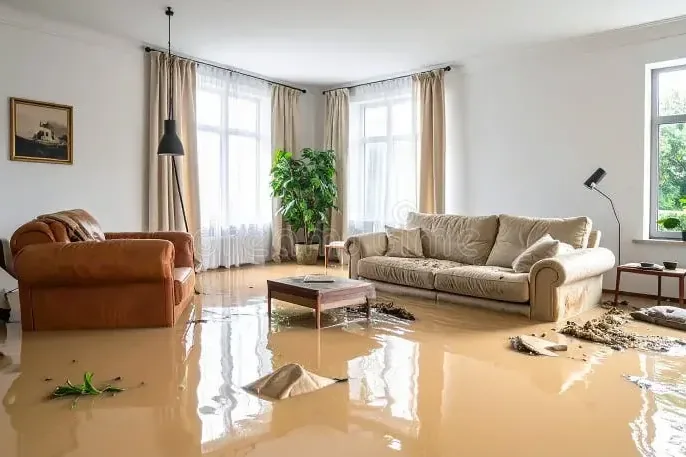
On September 17, 2025, the National Weather Service issued a Flood Watch for the San Gorgonio Pass area near Banning as the remnants of Tropical Storm Mario brought heavy rain, thunderstorms and gusty winds. A watch is a warning that conditions could produce flooding, and it is the moment to get ready. This article covers what to do when runoff does reach a home, and how the cleanup is sequenced.
Key takeaways
- A Flood Watch means flooding is possible, so move valuables up and know where the electrical panel is before the rain arrives.
- Never wade through standing water near outlets, appliances or a running power supply; shut off power only if the panel is dry and reachable.
- Storm water carries mud and contamination, so soaked carpet, pad and drywall are treated differently from clean plumbing water.
- Water removal comes first, then measured drying, because wet framing and subfloors hold moisture long after the surface looks dry.
- Photos taken before anything is moved, plus a written list of damaged items, make an insurance conversation easier.
What a Flood Watch Means for a Pass Community
The San Gorgonio Pass funnels weather between the mountains, and the National Weather Service warning in September 2025 pointed to runoff in creeks, low water crossings and burn scars. Most of the year the area is dry, so heavy rain can surprise people who have never seen water move through a neighborhood.
A watch is the time for preparation, not for waiting to see what happens.
- Move rugs, boxes and electronics off ground level floors.
- Locate the main water shutoff and the electrical panel.
- Photograph each room before the storm arrives.
- Keep a flashlight, gloves and boots where they can be reached.
How Runoff Reaches a Home
The San Gorgonio River rises in the San Bernardino Mountains, flows through Banning Canyon and then through the city. It is intermittent, with significant flow only after winter storms and spring snowmelt, which means a dry channel can fill quickly when a storm sits over the mountains.
Runoff does not need a river to cause harm. It can pool against a garage door, push under a threshold or find a low doorway on the downhill side of a lot.
Common entry points
Garage doors, back patio thresholds and sliding doors are the usual places where storm water first enters a home.
- Garage door seals and floor drains that cannot keep up.
- Patio and sliding door tracks.
- Low windows and window wells.
Why elevation does not make a home immune
Banning sits at about 2,300 feet, but a higher elevation only changes where runoff comes from. Water still follows grading, and homes below a slope or beside a channel catch the most.
Safe First Steps Once Water Is Inside
Safety comes before saving belongings. Standing water can hide power cords, sharp debris and slick surfaces, and floodwater should be treated as contaminated.
If the electrical panel is in a dry area and can be reached without crossing water, shutting off power to the affected rooms is the safest choice. If the panel is wet or the route is wet, that decision belongs to a qualified electrician or the utility.
- Stay out of rooms with standing water until power is confirmed off.
- Wear boots and gloves when moving anything.
- Lift furniture legs onto blocks or foil to stop stains spreading upward.
- Open interior doors so air can move, and run any dry room fan.
- Take dated photos and write down every affected item.
Water Removal Comes First
The longer water sits, the further it travels into drywall, flooring and cabinet bases. A professional water extraction visit uses pumps and extractors to remove standing water and pull water out of carpet and pad.
Hand towels and a household wet vacuum can help with a thin film, but they cannot reach water that has wicked into walls and under floors.
Muddy and contaminated water
Storm water that carries silt or runoff is not the same as a clean supply pipe break. Porous materials such as carpet pad, insulation and some drywall are usually removed instead of dried in place.
A crew also cleans and sanitizes hard surfaces that touched the water.
Clean water from a roof or pipe
If the water entered through a roof or ceiling instead of the ground, it can often be dried in place after the source is stopped.
Drying Is a Separate Stage From Removal
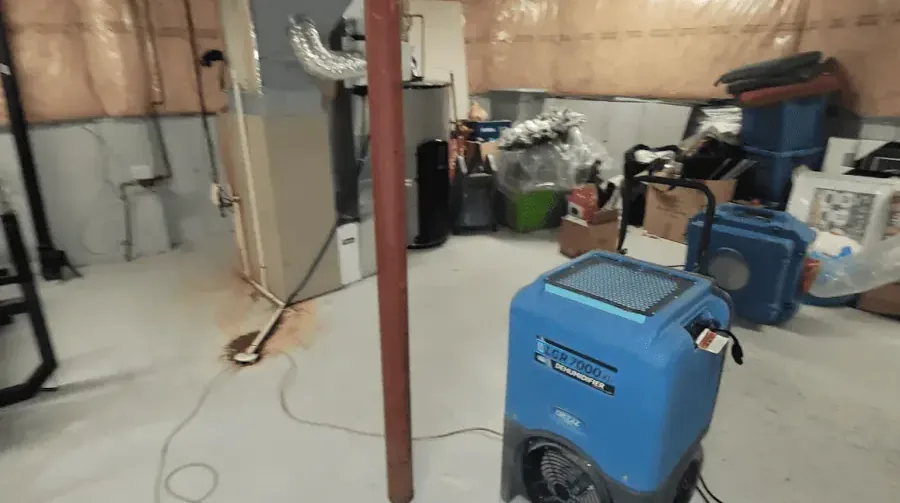
After the standing water is gone, the structure still holds moisture. Structural drying uses air movers and dehumidifiers, and moisture readings tell the crew when a wall, subfloor or framing member is actually dry.
Drying is measured over several days, not guessed from how the surface feels. Closing the work too early is how hidden moisture ends up behind baseboards and in wall cavities.
- Wall cavities are opened where readings stay high.
- Wet insulation and soaked drywall are removed first.
- Equipment is checked and adjusted during the drying period.
- Final readings are recorded before repairs begin.
Keeping Records for Insurance
Flood coverage is often separate from standard homeowners coverage, so the policy should be read before assuming what applies. A written list and photos give the insurer a clear starting record.
Receipts for emergency work, notes on when the water arrived and the order of cleanup steps are all worth keeping together in one folder.
Mud, Silt and Debris Around the House
Storm runoff leaves more than water behind. Fine silt settles on floors, in carpet fibers and in door tracks, and it dries into a layer that is hard to remove and that holds moisture against the surface beneath.
Outside, debris against a wall or door can send the next round of water straight inward. Clearing drains, gutters and the base of exterior doors before more rain arrives is a simple precaution.
Mud on hard floors can be shoveled and rinsed, but mud in carpet, cabinets and wall bases is a job for equipment, because the soil carries contamination along with it.
- Shovel or scrape heavy mud before it dries.
- Keep children and pets out of muddy areas.
- Rinse hard surfaces with clean water, then dry them fully.
- Set aside any soaked stock, boxes or stored items for sorting.
Dry Washes and Low Water Crossings
The Flood Watch warning also named low water crossings, a reminder that driving into moving water is a separate danger from the water inside a house. A crossing that looks shallow can still carry a vehicle away.
Residents who live near a wash or channel should know the safest route out of the neighborhood before the storm begins, and should not wait until the water is already moving.
When Storm Cleanup Needs Specialist Help
A small amount of water at one door can be a homeowner project. Water in several rooms, mud on floors, or any water that reached an electrical outlet calls for storm and flood cleanup from a trained crew.
The deciding questions are how far the water spread, how long it sat and whether anything in it was contaminated.
Questions
What does a Flood Watch mean in Banning?
A watch means conditions could produce flooding. For the San Gorgonio Pass, the September 2025 watch came with warnings about runoff in creeks, low water crossings and burn scars, so residents were told to prepare.
Is storm water in a house different from a pipe leak?
Yes. Storm water carries mud and contamination, so porous materials are usually removed. Clean supply water from a pipe can often be dried in place when the source is stopped.
Should power be shut off after a flood in the house?
Only if the panel is dry and can be reached without crossing water. Otherwise stay out and have an electrician or the utility handle it.
How long does drying take after standing water is removed?
Drying runs for several days and ends when moisture readings return to normal, not when surfaces feel dry.
Does homeowners insurance cover flood water?
Coverage varies, and flood is often treated separately from sudden plumbing leaks. Reading the policy and documenting the loss early helps.
What should be moved first when a Flood Watch is issued?
Valuables, electronics, important papers and rugs go up off ground level floors, and the main water and electrical shutoffs are located.
Can silt and mud be left to dry before cleanup?
Heavy mud should be removed before it hardens. Dried silt holds moisture against floors and is harder to clean later.