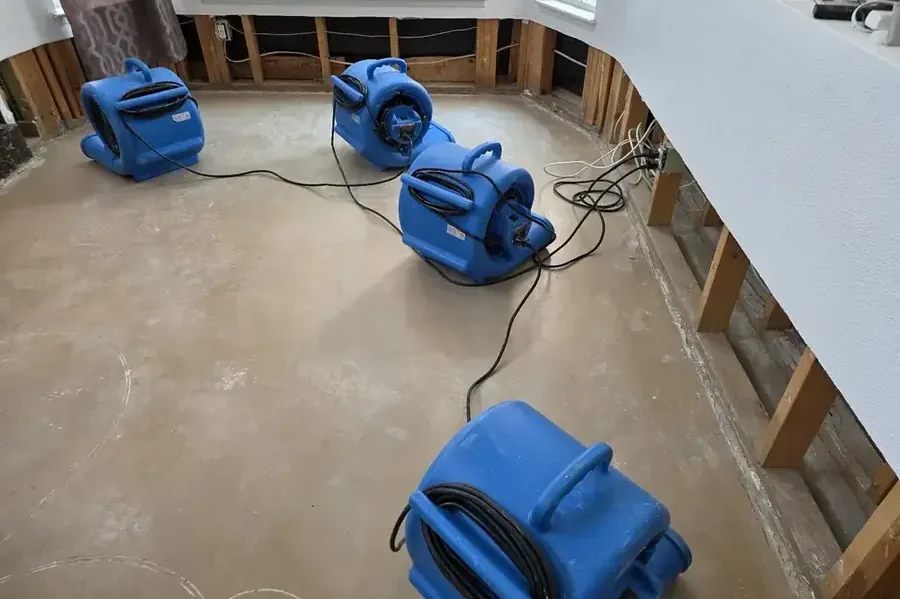
Banning had 11,961 housing units at the 2020 census, and 67.4 percent of occupied units are owner-occupied. For those owners, a hidden leak is expensive because it is found late. The water runs inside a wall or under a floor, and the first sign is often a stain, an odor or a higher bill.
Key takeaways
- Hidden leaks give quiet clues: a rising water bill, a musty smell, warm floor spots and paint that bubbles.
- A simple meter check with every fixture off can confirm a leak exists.
- Finding the source early limits how much wall, floor and cabinet has to be opened.
- Moisture meters and a thermal camera find the wet area without cutting blindly.
- After repair, the area is dried with measured equipment until readings are normal.
Why Hidden Leaks Are Costly
A burst is obvious and gets fixed right away. A slow leak hides inside walls, behind cabinets and beneath flooring, and it can run for weeks.
By the time it shows, insulation, drywall and framing may all be wet.
Early Warning Signs
The clues are small but consistent. Watching for them is the cheapest form of protection.
- A water bill that rises with no change in use.
- A musty or earthy smell in a closed room.
- Paint or wallpaper that bubbles or peels.
- Warm spots on a floor.
- The sound of running water when everything is off.
- Stains on cabinet floors or ceilings below bathrooms.
Confirming a Leak at Home
The simplest test uses the water meter. Turn off every fixture and appliance, then check whether the meter dial still moves.
If it does, water is leaking somewhere on the property. That moves the question from whether to where.
Shutoff and the water company
Banning Heights Mutual Water Company serves the Banning Heights area, so owners there should know who supplies their water and where the home's shutoff valve is before they need it.
Checking fixtures first
Toilets that run, dripping faucets and supply hoses are the easy causes. Rule those out before opening a wall.
How Professionals Find the Source
A hidden leak water damage visit uses moisture meters, a thermal camera and sometimes acoustic tools. These show where the water is without cutting random holes.
Once the source is located, a plumber repairs it and the restoration crew handles the wet materials.
- Moisture meter readings on walls and floors.
- Thermal camera to see cool wet patches.
- Pressure or meter tests to narrow the pipe.
- Targeted openings at the wettest spot.
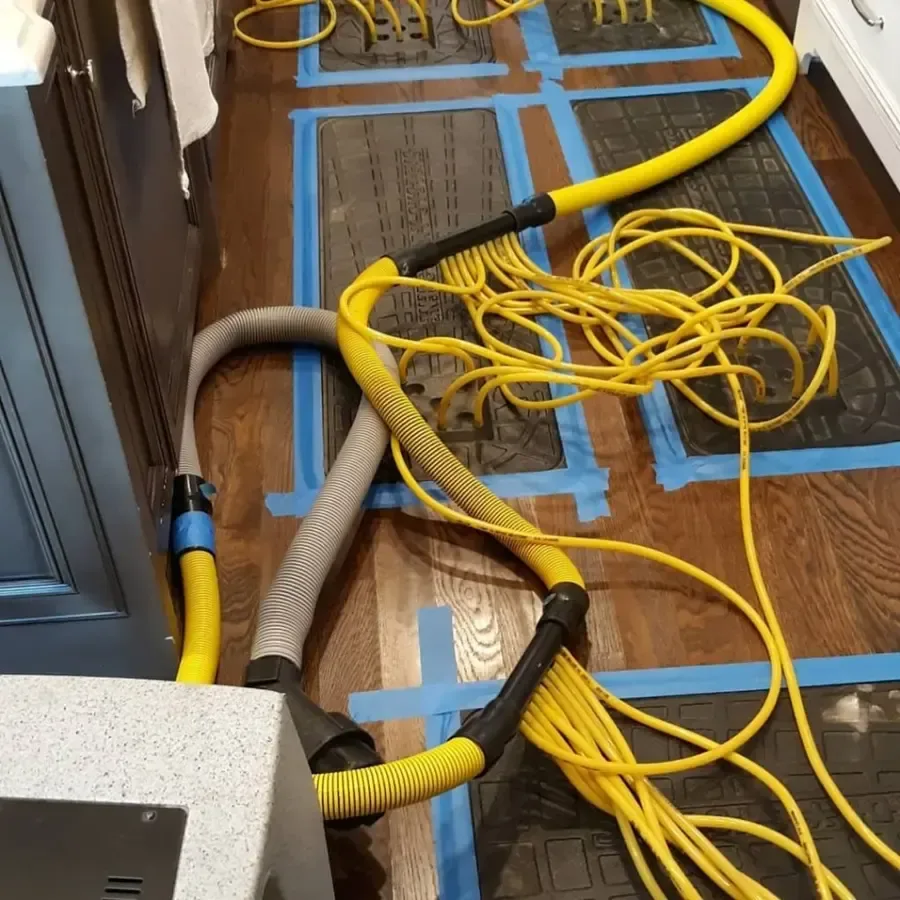
Drying After the Repair
After the leak is stopped, water extraction removes any standing water, and drying equipment handles the rest. Air movers and dehumidifiers run until readings match normal.
Insulation and soft drywall are removed when they cannot be dried, and the area is closed only when it is dry.
Older Residents and Shared Help
About 28.1 percent of Banning residents are 65 or older. Moving furniture and lifting wet carpet can be hard, so a family member or neighbor can help watch for early signs and arrange the visit.
A short note of the date, symptoms and photos helps with any later insurance step.
Where Hidden Leaks Usually Start
Most hidden leaks start at a connection, not in the middle of a pipe. Supply hoses, shutoff valves, drain joints under sinks and shower valves all have seals that wear out.
Water heaters, dishwashers, refrigerator ice makers and washing machines add more connections that are easy to overlook, because they sit behind or beneath other things.
- Washer and dishwasher hoses.
- Valves and drains under sinks.
- Shower valves and tub drains.
- Ice maker supply tubes.
- The base and connections of the water heater.
A Room by Room Check
A quarterly walk through the house, with a flashlight and dry hands, finds most early signs. It takes only a few minutes per room and costs nothing.
In the kitchen, the cabinet floor under the sink is the first place to look. In bathrooms, the cabinet below the vanity, the base of the toilet and the wall beside the tub are the places to check.
- Kitchen: sink cabinet, dishwasher base, refrigerator supply.
- Bathrooms: vanity, toilet base, tub wall.
- Laundry: hoses, drain box, floor around the machine.
- Garage or closet: water heater and the floor beneath it.
What Waiting Costs
Slow water does steady harm. Drywall softens, paint peels, flooring cups and cabinets swell, and the area that is wet grows each week.
The bill also rises, because water is running that no one is using. A small repair found early is far smaller than a rebuild of a wall, a floor and a cabinet base found late.
Talking to a Landlord or Neighbor
Not every owner lives in the home that leaks. Where a unit is rented or shares a wall, the first step is to tell the landlord or neighbor in writing and to share photographs.
A written note helps everyone agree on when the problem was seen and what was done.
When Water Reaches Floors and Walls
Once a leak is stopped, the wet materials are what matter. Hardwood cups, laminate swells and carpet pad holds water for a long time, so floors are lifted or dried with special equipment.
Walls are checked with a meter across several heights, because water wicks upward in drywall and can be wetter than it looks.
A written drying record shows the readings from the first visit to the last, and it is the best proof that the structure is dry before repairs begin.
Keeping a Simple Leak Log
A notebook or phone note with the meter reading, the date and any new stain gives a clear picture over time. Two readings taken a few days apart with nobody using water show whether the number is still climbing.
The same log helps a plumber and a restoration crew decide where to start, and it makes an insurance conversation easier because the dates are written down.
Preventing the Next One
An annual look at supply hoses, under sink pipes and the water heater area catches most problems early. A burst pipe water damage call is a different, urgent case, but many burst pipes began as small leaks that went unnoticed.
Questions
How can a hidden leak be confirmed?
Turn off all fixtures and appliances and check whether the water meter dial still moves. Movement means a leak exists.
What are signs of a hidden leak?
A higher water bill, musty smell, bubbling paint, warm floor spots, stains and the sound of running water with everything off.
Do hidden leaks always need walls opened?
No. Moisture meters and thermal cameras locate the wet area so only the necessary section is opened.
Who should be called first?
A plumber fixes the pipe, and a water damage crew dries the structure. Both steps are needed.
Is a small stain worth checking?
Yes. A small visible stain can mean a much larger wet area behind it.
How often should the house be checked for leaks?
A quick check of cabinets, hoses and the water heater area every few months finds most early problems.