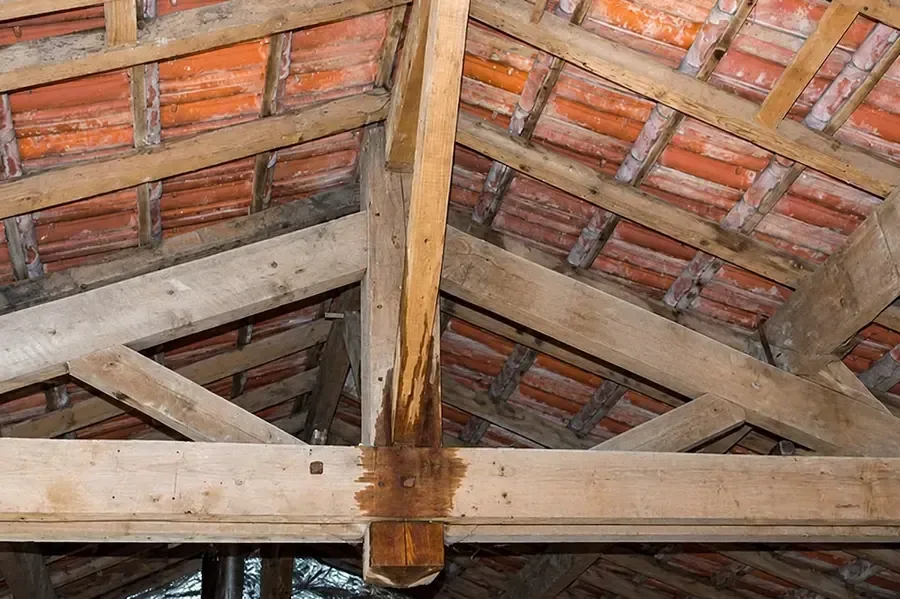
The San Gorgonio Pass gets snow at least once or twice in most winters, though it rarely sticks to the freeway or city streets. On December 30, 2014, a strong cold storm under a Winter Storm Warning brought snow to Beaumont and Banning. Even a thin layer that melts on a warm roof can send water behind flashing, and a ceiling stain follows a day or two later.
Key takeaways
- Snow that melts slowly on a roof can send water under shingles and flashing just like rain.
- The ceiling stain usually appears away from the roof opening because water travels along framing.
- Wet attic insulation holds water for a long time, so it is removed, not just dried on top.
- A tarp is a short term cover, and a proper roof repair must follow before the next storm.
- Photographs of the roof, attic and ceiling make later repairs and insurance steps easier.
How Pass Snow Reaches a Ceiling
Banning sits at about 2,300 feet, cooler than Riverside at 800 feet. Snow does not last, but the melt cycle is hard on roofs that were built for mostly dry weather.
Beaumont is higher still, at the summit of the pass at 2,500 to 3,000 feet, and is usually 5 to 10 degrees colder than lower neighbors.
The Path From Roof to Ceiling
Water enters through flashing, nail holes, vent boots or worn shingles, runs along rafters and soaks insulation. When the insulation can hold no more, the water reaches the drywall.
Where roofs fail first
The weak points are the same in snow and rain.
- Flashing around chimneys and vents.
- Valleys where two slopes meet.
- Cracked or lifted shingles.
- Skylight edges.
What the stain looks like
A brown ring that grows after storms points to the roof. A flat stain that grows on dry days may come from plumbing or an air conditioner drain.
Protecting the Room
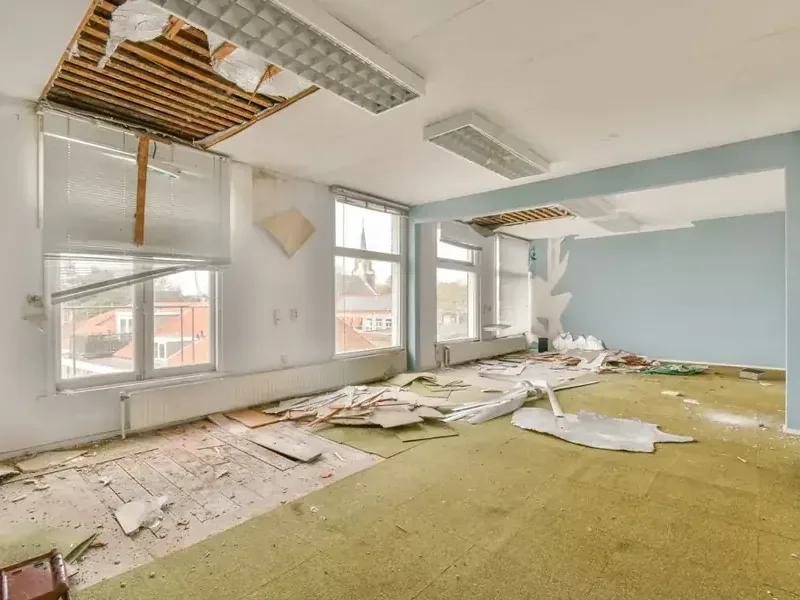
As soon as a stain appears, contain the water. Sagging drywall can collapse, and wet insulation above it adds weight.
- Move furniture and electronics out of the room.
- Place a bucket and plastic sheet under the stain.
- Release trapped water from a bulge with one small hole.
- Turn off lights on the wet circuit.
- Photograph before and after each step.
Banning Homes: Owners Decide Quickly
Banning has 11,961 housing units counted in 2020, and 67.4 percent of occupied units are owner-occupied. Owners usually arrange roof repairs and dryout directly, so knowing the order of work saves time.
A roof leak water damage call covers locating the opening and drying what is wet, while a roofer completes the permanent repair.
Beaumont Homes: Winter Storms Test Newer Roofs
Beaumont has grown quickly as Southern California residents moved for lower housing cost, so many roofs are newer but still exposed to heavy storms. The December 14, 2021 storm brought just over 1 inch of rain by 2 pm and closed Beaumont Avenue and Brookside Avenue.
A Beaumont roof leak is handled the same way, with moisture mapping first and drying after the source is covered.
What Gets Dried and What Gets Removed
Firm drywall with a small stain can often be dried in place. Sagging or soft sections come out with the insulation above them.
Air movers and dehumidifiers dry the framing, and meters confirm when it is dry. Ceiling leak water damage repairs wait for those readings.
- Firm drywall: dried and sealed.
- Soft or sagging drywall: removed.
- Attic insulation: removed and replaced.
- Framing: dried until readings are normal.
Slow Melt and Hidden Pathways
On the rare days when snow does settle on a roof, it melts from the bottom up as heat escapes through the attic. The water runs down and can back up behind flashing or under the first row of shingles.
That kind of leak is quiet. There may be no drip, only a gradual darkening of drywall and a soft patch in the ceiling that appears days later.
- Dark streaks on ceilings near exterior walls.
- Damp insulation along the edge of the attic.
- Peeling paint at the top of a wall.
- A faint musty smell in a closet below the roof.
Checking the Attic After Snow or Rain
A flashlight and a careful look at the underside of the roof deck show a lot. Dark streaks, damp insulation and daylight at a vent are all clues.
Stepping only on framing keeps a visitor from falling through the ceiling. If the space is tight, a photograph from the access opening is safer than a closer look.
What a Restoration Visit Includes
A crew measures moisture in the ceiling, walls and insulation, then removes materials that cannot be dried. Drying equipment is placed and adjusted, and readings are taken until the structure matches normal levels.
The roof repair itself is done by a roofer, and the two trades work in sequence so that the ceiling is not closed until it is dry.
- Moisture mapping of the ceiling and nearby walls.
- Removal of wet insulation and soft drywall.
- Drying equipment placed and monitored.
- Final readings before drywall is replaced.
Gutters, Downspouts and Branches
Water that cannot leave the roof edge backs up under the first row of shingles. Gutters packed with leaves and downspouts that dump water against a wall turn a small leak into a larger one.
Clearing gutters in the fall and trimming branches that rub the roof takes an afternoon, and it removes two common causes of winter roof leaks.
After any storm, a quick walk around the outside of the house with a flashlight shows missing shingle pieces, bent flashing and pooled water near the foundation.
Reporting the Loss
Photographs of the roof, attic and ceiling taken before any repair are the best record of what happened. A short note with the date of the storm and the date the stain was first seen completes it.
Keeping receipts for a tarp, a roofer and a dryout together in one folder makes the next conversation with an insurer simpler for owners and renters alike.
A Fall Roof Check Before the Snow Comes
A short roof inspection before winter finds cracked sealant and loose flashing while the weather is dry. Clearing gutters and trimming branches near the roof also reduces the places where water can back up.
The Beaumont service page shows the water damage work available on that side of the pass.
Questions
Does snow cause roof leaks in the pass?
It can. Snow that melts on a roof sends water behind flashing and under shingles in the same way rain does.
How often does it snow in Banning?
The pass gets snow at least once or twice in most winters, though it rarely sticks to the freeway or city streets.
Why does the stain appear away from the roof leak?
Water travels along rafters and insulation before it drops through drywall.
Should attic insulation be replaced after a leak?
Usually yes. Wet insulation holds water and loses its value, so it is removed and replaced.
Is a tarp enough?
A tarp is only a temporary cover. A roofer should complete a permanent repair before the next storm.