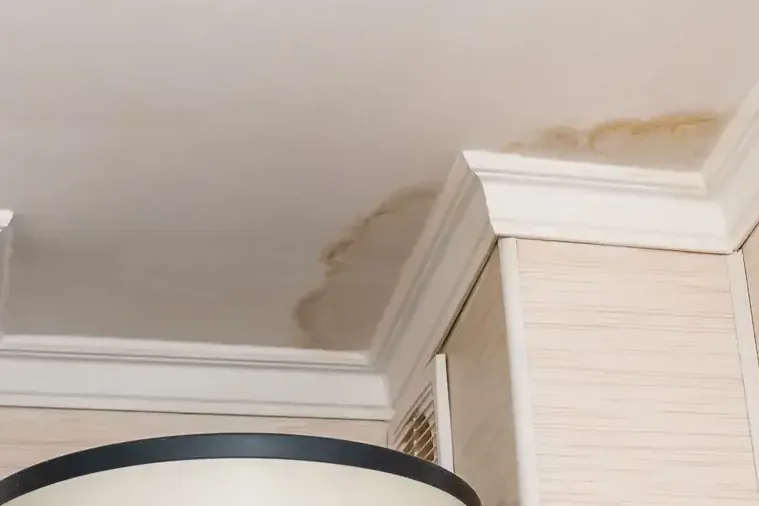
On December 14, 2021, a winter storm closed Beaumont Avenue and Brookside Avenue and caused a debris flow in Cherry Valley, with just over 1 inch of rain recorded in Beaumont by 2 pm. A single storm like that is often enough to reveal a roof that was already marginal. The ceiling stain that shows up a day or two later is the first sign, and what happens next decides whether the repair is small or large.
Key takeaways
- A ceiling stain after a storm usually means water has already crossed the roof, soaked insulation and reached the drywall.
- The stain is rarely directly under the roof opening, because water travels along framing before it drops.
- Poke relief holes only when a ceiling bulges, and catch the water in a bucket.
- Wet insulation and drywall must be dried or removed, even if the stain looks small.
- Fixing the roof and drying the ceiling are two separate jobs, and both are needed.
Why One Storm Can Expose a Weak Roof
Beaumont has a hot summer Mediterranean climate, with an average summer high of 95 F. Long dry summers bake sealants and flashing, so the first real rain can find every small gap.
The city has also grown quickly as Southern California residents moved for lower housing cost, which means many roofs are not old but are still tested hard by a few heavy storms in a row.
Reading the Stain
The color and shape of a ceiling stain give clues about the source. A ring with a darker edge suggests repeated wetting, while a fresh yellow patch suggests a first event.
Stains that point to the roof
Roof water tends to show near exterior walls, below ridges or around vents and skylights.
- Stains that appear only during or after rain.
- Spots near a chimney, vent pipe or valley.
- Damp insulation visible in the attic.
Stains that point to plumbing or the air conditioner
A stain that grows on a dry day, or that sits under a bathroom or air handler, may come from a pipe or a condensate drain instead.
Protecting the Room Right Away
The goal is to limit the spread while the source is found. Water that is allowed to sit in drywall weakens it, and wet insulation above it holds water for a long time.
If a ceiling is sagging or bulging, a small hole at the lowest point can let the water out in a controlled way instead of letting the whole panel collapse.
- Move furniture, rugs and electronics out of the room.
- Place a bucket and a plastic sheet under the stain.
- Turn off ceiling lights and fans on the wet circuit.
- Photograph the stain before and after each change.
Tracing the Leak Before Drying
A restoration crew uses a moisture meter and thermal camera to see how far the wet area reaches. Most ceiling leaks spread wider than the visible stain, so the readings matter more than appearance.
The roof opening is then covered or repaired by a roofer, and a crew handles the ceiling leak water damage cleanup below. Both steps depend on each other.
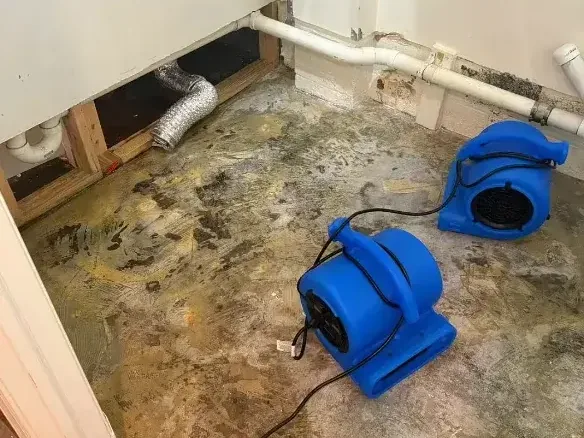
What Gets Removed and What Gets Dried
Small stains where the drywall is firm can sometimes be dried in place. Sagging, soft or heavily stained sections are cut out, along with wet insulation.
After removal, air movers and dehumidifiers bring the framing back to normal moisture readings before new drywall is hung.
- Firm drywall with a small stain: dried and sealed.
- Soft or sagging sections: removed.
- Wet attic insulation: removed and replaced.
- Framing: dried until readings are normal.
Roof Repair and Follow Up
A tarp is a short term cover, not a repair. A permanent fix on flashing, shingles or a roof penetration should be done before the next storm, and roof leak water damage cleanup is easier when the roof is already sealed.
Beaumont Building and Safety accepts permits and plan submittals digitally only, by email, so any larger roof project should check there for what applies.
Checking the Attic After the Rain
If the attic is safe to enter, a flashlight and a careful look show a lot. Dark, flattened insulation and damp wood point straight to the path water took.
Stepping only on framing, never on bare drywall, keeps a visitor from falling through the ceiling. If the space is tight or the footing is unclear, a photograph from the access opening is safer than a closer look.
- Look for stained or matted insulation.
- Look for daylight around vents and chimneys.
- Check the underside of the roof deck for dark streaks.
- Note the spot and take a photograph for the roofer.
Renters, Owners and the Landlord Call
In the 2010 census, 25.0% of Beaumont housing units were occupied by renters, and 75.0% were owner-occupied. A renter who sees a ceiling stain should tell the landlord in writing and keep photographs of the date and the size of the stain.
Owners make the same record for themselves. A few photographs and a short note about when the rain fell make a repair order and an insurance conversation much clearer.
Insurance Notes
The city says homeowners insurance typically does not cover flood damage. A roof leak is a different kind of loss from a flood, but the policy wording is what decides, so it is worth reading before the repair starts.
Keeping receipts for emergency work such as a tarp or a dryout also helps.
Getting Ready for the Next Storm
Snow falls in Beaumont but rarely sticks more than a couple of hours, so the main winter test for roofs is rain and wind. A short roof check each fall, before the rains, finds loose flashing and cracked sealant.
The Beaumont service page lists the water damage work available for homes and small businesses in the city.
Questions
Why did a ceiling stain show up days after the storm?
Water travels along framing and insulation before it reaches drywall, so the stain can appear a day or two after the rain has stopped.
Can a ceiling stain be painted over?
Not until the moisture is gone. Painting over wet drywall hides the problem and lets damage continue.
When should a ceiling be cut open?
When it sags, bulges or feels soft. A small hole at the lowest point releases trapped water safely.
Does a winter storm always cause roof leaks in Beaumont?
No. It tests roofs that already have weak flashing, cracked sealant or worn shingles, which is why a yearly check helps.
Who fixes the roof and who dries the ceiling?
A roofer repairs the opening. A water damage crew removes wet materials and dries the structure below.
Should a renter or an owner call first?
A renter tells the landlord in writing with photographs. An owner arranges the roof repair and the dryout directly.
Is it safe to go into the attic after a storm?
Only if the footing is clear. Step on framing, never on drywall, and take photographs from the access opening if the space is tight.