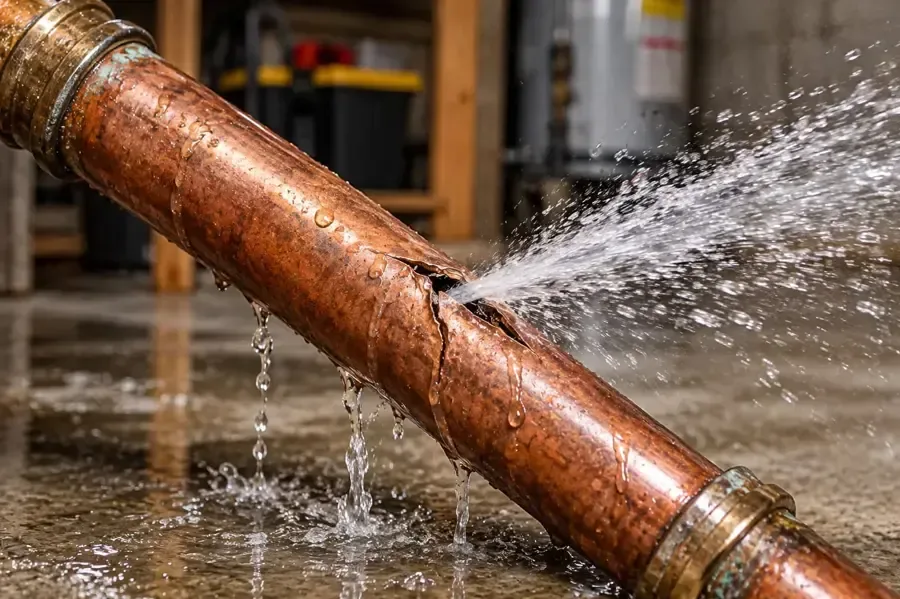
East Valley Water District provides both water and sewer service in Highland, and in March 2026 it began a multi phase water main replacement on Dundee Avenue, south of Lynwood Drive, to replace aging, undersized pipe. The district also notes that some century old homes remain near Greenspot. Mains and house pipes are separate systems, but both are a reminder that older pipe fails and that a burst inside a home needs a fast, organized response.
Key takeaways
- Find the home's main shutoff valve before an emergency, because stopping the water is the first and most important step.
- A burst pipe inside a wall can run unseen for a long time, soaking insulation, drywall and framing.
- A main replacement by the district is a utility project, while a pipe break inside the house is handled by the owner.
- Water removal is followed by measured drying, and wet materials that cannot dry are removed.
- Older homes deserve a yearly look at visible pipes, valves and the area around the water heater.
What the Dundee Avenue Project Tells Homeowners
The district's work on Dundee Avenue is planned to continue on Villa Court. It shows that Highland's water system includes aging and undersized pipe, which the district is replacing in phases.
The project is about the public system. The pipes inside a home are a separate matter and are the owner's concern.
Why Older Homes Near Greenspot Need Attention
The district describes its once agricultural service area as now urbanized, with some century old homes remaining near Greenspot. Highland was founded as a townsite in 1891 and its original townsite and packing houses sit in the Historic District on Palm Avenue.
No one can say which material is in any particular house, so a visual check and a plumber's opinion are more useful than guessing.
- Look for green or white crust at joints.
- Check shutoff valves for drips or stiffness.
- Watch for stains on cabinet floors and ceilings below bathrooms.
- Notice a rising water bill with no change in use.
Stopping the Water
The home's main shutoff valve should be found and tested while nothing is wrong. When a pipe bursts, turning the valve fully closed stops more water from coming in.
Opening a faucet at the lowest point drains what is left in the pipes, and turning off the water heater prevents damage to its elements.
If the valve will not turn
A stuck valve is a sign it needs replacing. If it cannot be closed, the district should be contacted about the supply to the property.
Electrical safety
If water is near outlets or the panel, avoid touching them and let an electrician make the area safe.
How a Hidden Leak Differs From a Burst
A burst is dramatic and obvious. A pinhole leak or slow joint failure behind a wall can last weeks, and the damage is usually larger when it is found.
Signs include a musty smell, paint that bubbles, warm spots on a floor or the sound of running water when everything is off. A hidden leak water damage visit uses moisture meters and a thermal camera to find the source.
What Water Removal and Drying Look Like
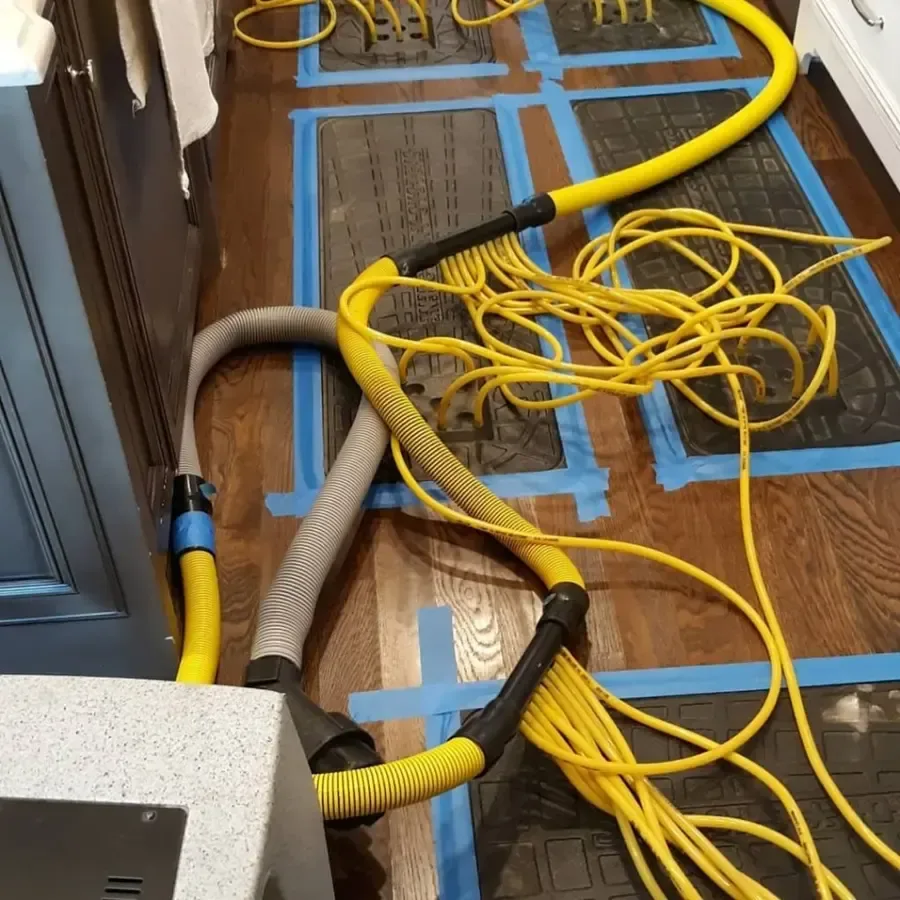
After the water is stopped, a crew removes standing water, then opens or monitors the affected walls and floors. Water extraction comes first, followed by drying with air movers and dehumidifiers.
Wet insulation is removed, and drywall that is soft or stained is cut away. Framing and subfloors are dried until readings are back to normal.
- Standing water removed.
- Wet insulation and soft drywall removed.
- Air movers and dehumidifiers placed.
- Daily or regular moisture readings taken.
- Repairs begin only after readings are normal.
Repairs and Records
A plumber replaces the failed pipe or section, and the restoration crew documents the dry readings. Keep photos of the break, the repair and the drying logs in one place for an insurer.
A burst pipe water damage job is easier to scope when the plumber's note about the failure is included.
Rented Homes and Shared Walls
In 2010, 34.7% of occupied Highland housing units were rented, out of 16,578 housing units. A burst pipe in a rented unit can reach a neighbor through a shared wall or ceiling, so a quick message to the landlord and to adjoining units matters.
Tenants photograph the damage and the shutoff step they took. Landlords arrange the plumber and the dryout.
Water Heaters and Appliance Hoses
Not every burst comes from a pipe in a wall. Supply hoses behind washers, the connection at a dishwasher and the lines to a water heater fail often and are easy to see.
Replacing old hoses and checking the base of the water heater for stains is quick and cheap compared with a dryout.
- Washer hoses checked for bulges or cracks.
- Dishwasher and sink connections checked for drips.
- Water heater base checked for stains or rust.
- Shutoff valves exercised once a year.
What to Keep Ready
A small kit by the main shutoff makes an emergency less chaotic. A flashlight, gloves, towels, a bucket and a card with the plumber's contact take little space.
Photographs of the shutoff location, kept on a phone, help anyone else in the home act quickly.
Reading the Water Bill
The water bill is the cheapest leak detector in the house. A sudden rise, or a number that creeps up month after month with the same habits, points to water going somewhere unseen.
Comparing the bill with the same month a year earlier removes the effect of seasons. A meter check with all fixtures off then confirms whether a leak is running.
Choosing the Order of Work
The order matters. The water is stopped first, the plumber repairs the pipe, and the drying crew removes wet materials and runs equipment until readings are normal.
Rebuilding comes last, after every reading is dry.
Skipping the middle step is the most common mistake, because a repaired wall that looks fine can still hold water inside.
Getting Ready for the Next Break
A yearly check of visible pipes, valves and hoses is cheap. Knowing where the shutoff is and testing it protects the whole house, and the Highland service page lists the water damage services available for older homes and newer ones alike.
Questions
Who is responsible for water mains in Highland?
East Valley Water District provides water and sewer service and is replacing aging, undersized mains on Dundee Avenue, then Villa Court. Pipes inside a home are the owner's concern.
How can an older home protect against a burst?
Know the shutoff, test it, look at visible pipes each year and have a plumber check any pipe that shows corrosion or stains.
What are signs of a hidden leak?
Musty smell, bubbling paint, warm floor spots, stains on ceilings below bathrooms or a higher water bill with no change in use.
Is drywall always replaced after a burst pipe?
No. Firm drywall can sometimes be dried in place, while soft or stained sections are removed.
When is drying finished?
When moisture readings in the walls, floors and framing match normal readings, not when the surface feels dry.