Yucaipa sits at about 2,600 feet in the foothills of the San Bernardino Mountains, and its record lows are 11 degrees in January and 19 degrees in February. Mean daily minimums are 41 degrees in January and February and 40 degrees in December, so most nights stay above the danger zone. The record lows are the reason a few cold snaps still cause real pipe damage in homes that are not prepared.
Key takeaways
- Ice can split a pipe on a cold night, but the water usually does not pour out until the ice thaws.
- Pipes in garages, attics, exterior walls and crawl areas are the first to freeze.
- At the first sign of a frozen pipe, close the main shutoff and open the faucet so thawing water has somewhere to go.
- After a thaw, the wet area is dried with measured equipment and wet materials are removed.
- Prevention costs little: covers, a slow drip on cold nights and open cabinet doors.
Why Yucaipa Can Still See Frozen Pipes
The city has a Mediterranean climate and averages 19.49 inches of precipitation a year. January, February and March are the wettest months, at 3.91, 4.45 and 3.09 inches.
Most nights are mild, but the record lows of 11 and 19 degrees show that freezing nights do happen. A home that has never had a problem can still be hit once.
How a Pipe Splits
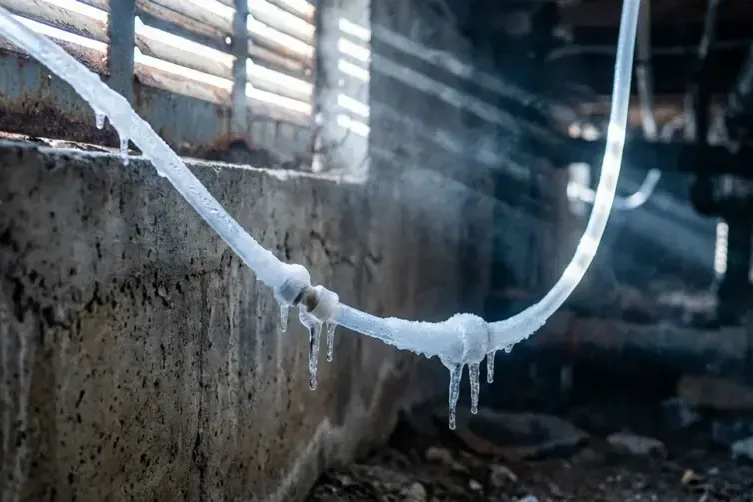
Water expands as it turns to ice, and the pressure builds between the ice plug and the closed faucet. The pipe usually splits at a weak spot, though the split is hidden by the ice itself.
When the ice melts, water flows out through the crack at full supply pressure.
Where pipes freeze first
Exposed or poorly insulated pipes freeze first.
- Garage walls and ceilings.
- Attic runs near vents.
- Pipes on exterior walls.
- Outdoor spigots and irrigation supply.
Signs that a pipe is frozen
A faucet that gives only a trickle, frost on a visible pipe or a bulge in a pipe are all warnings.
What to Do Before the Thaw
If a pipe is suspected frozen, close the main shutoff first. Then open the faucet nearest the frozen section so melting water can drain.
A hair dryer on low or warm towels can thaw a pipe slowly. Open flames and heat guns are never safe on a pipe.
- Close the main shutoff valve.
- Open the nearest faucet.
- Warm the pipe slowly with gentle heat.
- Check the whole length for cracks as it thaws.
- Call a plumber if the pipe is split.
What the Damage Looks Like After the Thaw
Water from a split pipe moves along framing and soaks insulation before it shows on a ceiling or wall. The visible damage is usually less than the wet area behind it.
A frozen pipe water damage visit measures moisture to find the real extent, which is often larger than the first stain.
How Cleanup and Drying Work
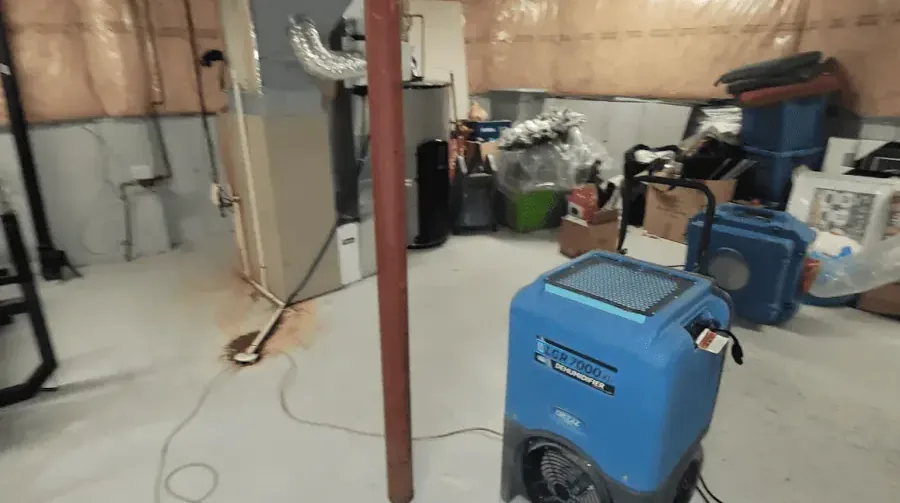
Standing water is pumped or extracted first, and burst pipe water damage cleanup follows with removal of wet insulation and soft drywall.
Air movers and dehumidifiers dry the framing and subfloor, and meters confirm when drying is finished.
- Standing water removed.
- Insulation and soft drywall removed.
- Equipment placed and adjusted.
- Readings taken until normal.
Prevention for Cold Nights
Foam covers on exposed pipes, sealed gaps around penetrations and a slow drip on the coldest nights reduce the risk. Cabinet doors under sinks on exterior walls can be left open to let house air reach the pipes.
Disconnect garden hoses and cover outdoor spigots before winter.
Garages, Attics and Empty Rooms
The pipes most at risk are the ones that sit outside the heated part of the house. A water heater in a garage, a hose bib on a north wall and a supply run through an attic all depend on outside air temperature.
A room that is never used and kept cold can freeze a pipe in a wall even when the rest of the home is comfortable. Leaving a small amount of heat on in unused rooms helps.
- Insulate garage supply pipes and the water heater lines.
- Cover outdoor faucets before the coldest nights.
- Seal gaps where pipes pass through walls.
- Keep a little heat on in unused rooms.
Leaving Home on a Cold Night
A pipe that thaws while no one is home can run for a long time before it is noticed. Before a trip in winter, closing the main shutoff and draining a few faucets removes the risk.
A neighbor or relative with a key can check the house during a long cold spell.
Records and Insurance
Photographs of the split pipe, the wet areas and the first readings from the drying crew are useful records. Coverage for a burst pipe depends on the policy, so reading it early avoids surprises.
Keep receipts for the plumber and the drying work in one folder.
Dripping Faucets and Cabinet Doors
A thin steady drip keeps water moving, and moving water is slower to turn to ice. The faucet farthest from the main shutoff is the best choice, since the water travels the whole length of the house.
Opening the cabinet doors under sinks that sit against exterior walls lets warm house air reach the pipes. Pet and child safe covers on any chemicals under those sinks should stay in place.
These steps cost almost nothing and take only a minute before bed on a cold night.
When Pipes Freeze in a Rental
Renters and landlords share the problem. The renter closes the shutoff if it is reachable and calls the landlord at once, and the landlord arranges the plumber and the drying.
A written message with photographs protects both sides and shows exactly when the damage was first noticed.
Renters, Owners and Who Acts
In Yucaipa, 72.7% of occupied homes are owner-occupied and 27.3% are rented, out of 19,479 occupied homes. Owners handle repairs directly, while renters should tell the landlord at once and photograph the damage.
The Yucaipa service page shows the full list of water damage work available for homes and businesses.
Questions
How cold does it get in Yucaipa?
Mean daily minimums are 41 degrees in January and February, with record lows of 11 degrees in January and 19 degrees in February.
Why does flooding start after the pipe thaws?
Ice blocks the crack until it melts, then water flows out under full supply pressure.
What should be shut off first?
The main water shutoff, then open the nearest faucet to drain the melting water.
Can a frozen pipe be thawed with a torch?
No. Open flames and heat guns are unsafe. Slow, gentle heat is the safer choice.
Who handles the repair if a rental pipe bursts?
The renter should tell the landlord immediately and document the damage, and the landlord arranges the repair and drying.