Slab Leak Water Damage in Highland, CA
A damp, warm or sinking floor with no visible leak can mean a pressurized pipe is failing beneath it. The crew traces the wet area, lifts the flooring that holds water and dries the floor system.
(888) 563-9619Ask about the warm floor- Warm or damp floors
- Flooring lifted and dried
- Leak area traced first
What to do the moment you find a slab leak
- Step 1Confirm the leak
Meters, a thermal camera and a closed main valve test help show whether water is still escaping.
- Step 2Mark the wet footprint
The crew maps how far the water spread under flooring, along walls and into baseboards.
- Step 3Lift and extract
Flooring that traps water is lifted, and any pooled water is pulled out.
- Step 4Dry and verify
Mats, air movers and dehumidifiers run until the floor system reads dry on every check.
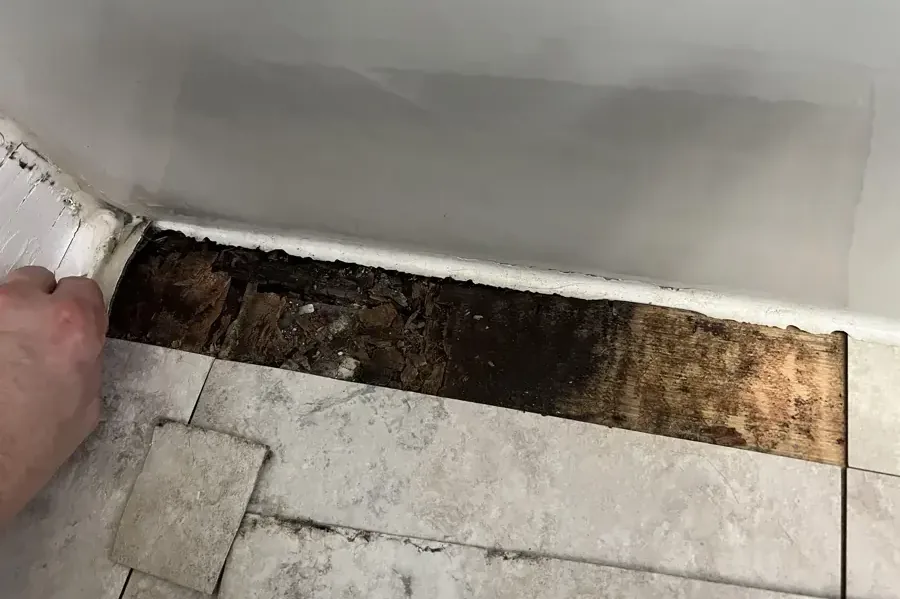
A slab leak starts under the floor and shows itself late. Homeowners notice a warm spot on the tile, damp baseboards, a musty smell or a water bill that keeps climbing. A slab leak can begin under the floor of any home, and the drying work starts as soon as the source is found: trace the wet footprint, remove the flooring that traps water and dry the floor system beneath it.
What does slab leak water damage cost in Highland, CA?
A small wet footprint under tile often costs $1,800 to $3,800, while carpet or laminate over the leak runs higher and a long-running hot water leak can reach $9,000 or more. Hot water leaks cost more because they also warm and wet the walls.
- Tile area mapped and photographed
- Baseboards pulled and dried
- Mats and air movers placed
- Flooring and pad removed
- Subfloor surface dried and checked
- Moisture readings logged each visit
- Walls and cabinets wicked and dried
- Wide flooring removal
- Longer drying schedule with checks
The drivers are the water category, the square footage, the material class and how fast drying started. For a planning range, try the water damage cost calculator.
How slab leak drying is handled in Highland
- 1
Listen and test
The crew checks warm spots and meter movement, then confirms with a plumber or leak specialist where the pipe is failing.
- 2
Trace the footprint
Moisture meters follow the wet area across the floor and up the walls, since slab water often travels farther than the visible stain.
- 3
Open flooring
Materials that trap water are lifted in sections, and the exposed surface is cleaned and left open to air and equipment.
- 4
Dry and recheck
Drying runs until readings match a dry reference, and the plumber's repair is checked again before new flooring is laid.
The standard behind slab leak drying
Thermal and acoustic tools point to the failing pipe.
Draw water out of laminate and hardwood layers.
Compare slab and subfloor readings to a dry reference.
Dehumidifiers pull vapor from sealed lower layers.
How a slab leak is traced
Thermal cameras, moisture meters and acoustic tools narrow down where the water is rising. The footprint of wet floor tells the crew how far to lift. A plumber or leak detection specialist confirms the failed pipe before anything is opened, so the drying work and the repair stay coordinated. Hot water pipes in a floor often warm the surface above them, while cold water leaks tend to leave a damp, cool patch. Either way the footprint is photographed and measured before any flooring moves, so the claim file shows the starting point.
- Warm spots point toward a hot water pipe in the floor
- Damp baseboards and cupped flooring mark where water has spread
- Shutting the main and watching the meter confirms the leak is active
Flooring over the leak
Tile resists water but traps it underneath, laminate swells quickly and carpet holds moisture in the pad. Each material is handled differently, with some lifted and replaced and some dried in place with mats. The goal is to leave no wet layer sealed under new flooring. Wood planks cup as they absorb water, and adhesive under vinyl lets go. Carpet is lifted from the tack strip, the pad is removed and the slab is exposed so it can release moisture to the air.
Drying and the claim
After the pipe is repaired, drying equipment runs until the slab surface and the materials above it read dry. Photos, repair invoices and logs support the insurance claim discussion where coverage applies, and the structural drying page covers the equipment used. Final readings are taken on the slab surface, the subfloor layers above it and the walls at the edge of the room.
Related water damage services in Highland
Slab leak water damage around Highland
Slab leak drying is available throughout Highland ZIP code 92346, including the neighborhoods of East Highlands, East Highland, West Highland and the streets near Base Line and Boulder Avenue.
The same service nearby: slab leak water damage in Banning, Yucaipa, Calimesa.
Slab Leak Water Damage questions
What are the signs of a slab leak?
Warm spots on the floor, damp baseboards, a musty smell, the sound of running water and a rising water bill are the usual clues. A water meter that keeps spinning with every fixture off is another strong sign.
Does the floor always have to be torn up?
Not always. Small leaks may only need lifted flooring in one area, and mats can dry some floor types in place.
Who finds the leak, the drying crew or a plumber?
A plumber or leak specialist confirms and repairs the pipe. The drying crew handles the water damage around it.
How long does a slab leak take to dry?
A few days for small tile areas, longer for hot water leaks that soaked walls and cabinets. Readings set the finish line. Hot water leaks usually take longer because they also wet the walls.
Is slab leak water covered by insurance?
Coverage varies by policy and cause, so the insurer should be asked early. Photos and logs from the drying visit support the claim.
Can new flooring go down right after the repair?
Only after the floor system reads dry. Sealing in moisture under new flooring leads to odor, cupping and bad adhesion. Patience here prevents callbacks.
Can a slab leak damage cabinets?
Yes. Water that rises through a floor wicks into cabinet bases and wall bottoms, so those are checked and dried.
A warm or damp floor and no visible leak?
(888) 563-9619Ask about the damp floorFind and dry the floor leak
Water under a floor keeps spreading while it is unseen, so a call to the dispatcher gets metering and drying planned.