Structural Drying in Highland, CA
Once the standing water is gone, framing, subfloor and drywall still hold moisture. The crew dries them with air movers and dehumidifiers and logs readings until each material reaches its target.
(888) 563-9619Plan the drying equipment- Daily moisture readings
- Air movers and dehumidifiers
- Dry goal documented
What to do the moment you find wet walls and floors
- Step 1Set the dry goal
A reference reading is taken from an unaffected area of the same home and written down.
- Step 2Place the equipment
Air movers and dehumidifiers are set according to the moisture map.
- Step 3Read and adjust
Meters are read at each visit and the equipment is moved as areas dry out.
- Step 4Release and report
Equipment leaves once readings match the goal, and the written log is provided.
Structural drying is the part of restoration that nobody sees but everything depends on. After flooding or a main leak, walls, floors and framing have to be dried fully before repair, or the hidden moisture causes swelling, odor and failed finishes. The work is measured, not guessed. A reference reading is taken in an unaffected part of the same house, and every wet material is dried until it matches that number.
What does structural drying cost in Highland, CA?
Drying one small area under Class 1 or 2 usually costs $1,200 to $3,000, ceilings and walls under Class 3 run $3,000 to $6,000, and dense materials under Class 4 can reach $9,000 or more. Room size and ceiling height raise the equipment needed.
- A few air movers placed
- One dehumidifier running
- Short visit schedule with readings
- Wall and ceiling cavities
- More dehumidifier capacity
- Daily readings
- Hardwood and slab drying
- Specialty drying systems
- Longer monitored run
The drivers are the water category, the square footage, the material class and how fast drying started. For a planning range, try the water damage cost calculator.
How structural drying is handled in Highland
- 1
Map the moisture
A meter and thermal camera chart every wet surface, which becomes the plan for where each machine will sit and how long it will run.
- 2
Set the dry reference
The crew takes a reading from an unaffected room of the same house, so the goal is based on that home's own materials.
- 3
Run and monitor
Equipment runs around the clock while the crew rechecks wet spots on each visit and moves machines as the readings fall.
- 4
Confirm and remove
When all materials meet the goal, the equipment is removed and the written log shows the drying path for the file.
The standard behind structural drying
Move dry air across surfaces.
Pulls vapor from the air.
Read moisture in wood, drywall and flooring.
Draw water from hardwood floors.
The equipment and what it does
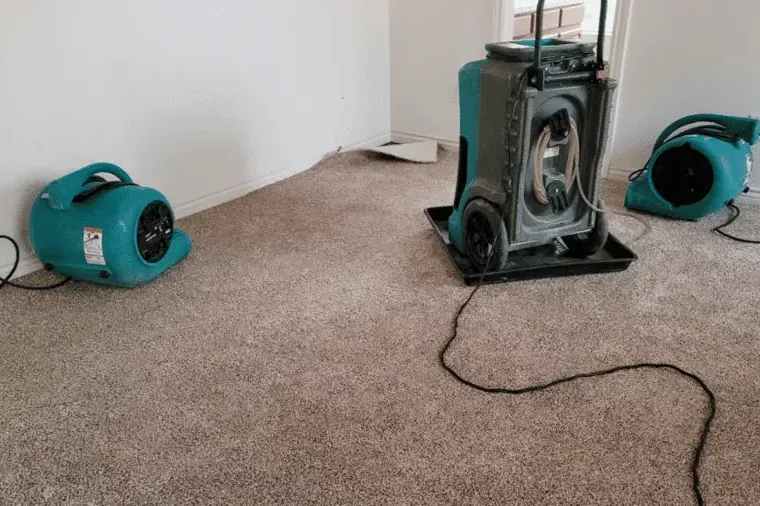
Air movers push dry air across surfaces and into cavities. Low grain refrigerant dehumidifiers pull the water vapor out of the air and carry it away. Mats and ports pull water from hardwood and wall cavities. Placement follows the moisture map, so each machine sits where it will work, not just where there is room.
- Air movers are set to carry moisture off floors and wall bases
- Dehumidifiers run in a closed room so the vapor cannot escape
- Meters and a hygrometer record progress during every visit
Classes of water damage
The standard sorts a loss by how much water the materials absorbed. A small, low evaporation job is Class 1 or 2, and a loss with wet ceilings and walls is Class 3. Class 4 covers dense materials like hardwood and concrete that hold water deeply and need longer, specialized drying.
When the equipment comes out
Drying ends when readings match the dry goal, not on a calendar day. The federal flood cleanup advice and basic flood safety pages explain why damp materials should not be sealed. Extraction comes first; see water extraction. A copy of the log goes to the homeowner and the adjuster.
Related water damage services in Highland
Structural drying around Highland
Structural drying is available across Highland ZIP code 92346, in homes and shops from the Palm Avenue historic core and Greenspot to East Highlands and Mountain Shadows.
The same service nearby: structural drying in Banning, Yucaipa, Calimesa.
Structural Drying questions
How long does structural drying take?
A few days for light losses, and a week or more for dense materials. Readings, not the calendar, decide. Thick framing, subfloors and concrete are the slowest to release water.
Why must equipment run all day and night?
Drying relies on continuous airflow and dehumidification. Stopping lets moisture return to the materials.
What is a dry goal?
A reading taken from an unaffected part of the house. Wet materials are dried until they match it. It is also called the drying goal in the logs.
Is the equipment loud?
Yes, it hums, but the noise is the cost of fast drying. The crew places it to limit nuisance.
Will the power bill rise?
Dehumidifiers and air movers draw power. Some adjusters consider that during a claim, so keep the dates.
Can wall repairs start before drying ends?
No. Closing walls over damp framing leads to odor and failed finishes.
Why are readings logged each visit?
The log shows progress and proves the structure reached its dry goal for the adjuster. That record also helps if a question comes up later about the repair.
Surface water gone but the walls still feel damp?
(888) 563-9619Ask about drying readingsDry the structure properly
Materials that look dry can still hold moisture, so a call lets the crew meter the framing and plan the equipment.