Hidden Leak Water Damage in Yucaipa, CA
Slow leaks do not announce themselves. A musty smell, a bubbling patch of paint or swollen cabinet trim may be the only clue that water has been quietly seeping inside a wall or under a sink for many weeks.
(888) 563-9619Find where the water hides- Leak traced by meters
- Cavity opened and dried
- Early warning signs
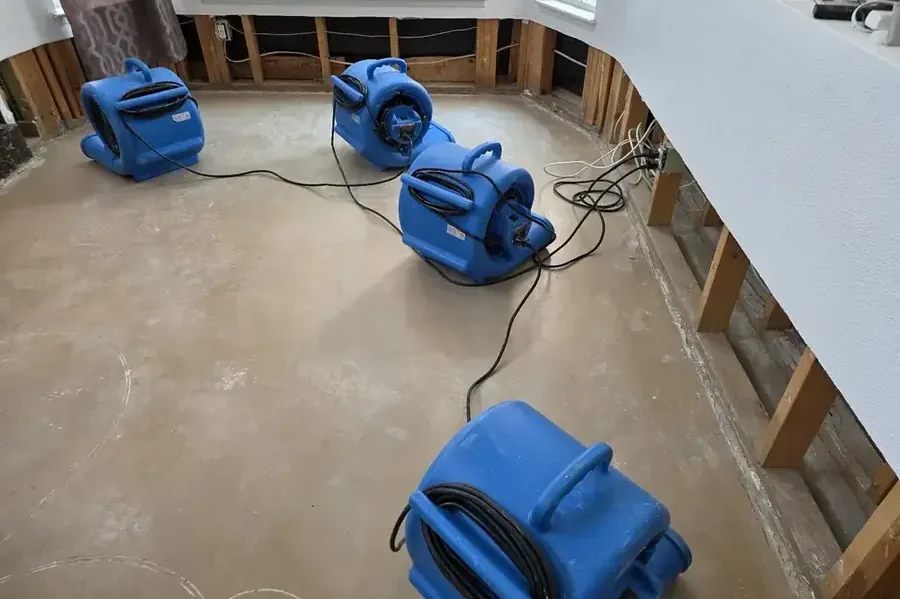
What to do the moment you find a hidden wall leak
- Step 1Report the clue
Describe the smell, stain or swelling and when you first noticed it, and whether it comes and goes.
- Step 2Scan and locate
Meters and thermal imaging map the wet area behind walls and under cabinets without needless cutting.
- Step 3Open and dry
A small section is opened, wet materials are removed and equipment dries the cavity from the inside out.
- Step 4Confirm and record
Readings show dry framing, and photos and numbers support the repair and the claim.
A hidden leak is any water problem you cannot see. It might be a drain joint dripping inside a wall, a supply fitting under a vanity or a shower pan seeping into the subfloor. Because nothing is dramatic, these leaks often run long enough to ruin framing and finishes. By the time a stain appears, the cavity behind it has usually been wet for a long while.
What does hidden leak water damage cost in Yucaipa, CA?
Hidden leak work usually costs $900 to $6,500+. One small wet cavity is inexpensive, a wall plus a cabinet base costs more, and a drain leak that has been running for months reaches the top of the range once framing is exposed and has to be dried and rebuilt.
- Meter scan to find the source
- Small opening cut and dried
- One round of readings
- Cabinet toe kick removed
- Wall section opened and dried
- Several days of equipment
- Decayed framing exposed
- More drywall and trim removed
- Extended drying and reports
The drivers are the water category, the square footage, the material class and how fast drying started. For a planning range, try the water damage cost calculator.
How hidden leak drying is handled in Yucaipa
- 1
Listen to the clues
The crew asks what you smelled, saw and heard, and where the water bill or the fixtures changed, to narrow the search.
- 2
Scan the structure
Meters and a thermal camera move along walls, floors and cabinet bases to find the wet zone without cutting into dry areas.
- 3
Open only what is needed
A modest inspection hole confirms the leak, and wet insulation and drywall are removed from that cavity alone.
- 4
Dry and verify
Equipment runs until readings match the dry reference, and the plumber can repair the fitting without working in a wet wall.
The standard behind hidden leak drying
Reads moisture behind finished surfaces without damaging them.
Shows cool damp patches inside walls.
Lets the crew look inside a cavity through a tiny hole.
Keeps dust and wet debris off furniture while walls are opened.
Why slow leaks go unreported
In Yucaipa, 27.3% of occupied homes are rented. A tenant may notice a smell and hesitate to mention it, and an owner who lives elsewhere may never see the cabinet. Slow leaks in rentals can sit unreported for a long time, spreading through walls and floors unseen. Most are found only when a smell, a soft floor or a ceiling stain finally gets someone to look, and by then the repair is much larger than the leak that started it.
How the leak is found
- Moisture meters read drywall, baseboards and cabinet bases without cutting.
- A thermal camera shows cool, wet patches that the eye cannot see.
- If readings stay unclear, a small inspection hole is cut, then repaired later.
- Water use is compared with the bill to separate a plumbing leak from a roof or condensate source.
Opening and drying the cavity
Once the wet area is mapped, the cavity is opened enough for air to pass through it. Saturated insulation and drywall are removed, air movers and dehumidifiers run, and readings are taken until framing and finishes match dry reference points. A plumber then repairs the leaking fitting, ideally before the wall is closed. The crew leaves a record of the readings so the next contractor can see the wall is dry and decide how to patch and finish it.
Why early action matters
Left alone, a seep soaks framing, swells cabinets and invites decay. Catching it while the loss is small keeps the repair inexpensive and avoids tearing out half a wall. For leaks that come through flooring, read about slab leak drying.
Related water damage services in Yucaipa
Hidden leak water damage around Yucaipa
Hidden leak detection and drying covers ZIP 92399 across Yucaipa, including Wildwood, North Bench, Mentone, Cherry Valley and Oak Glen, at every hour of the day or night.
The same service nearby: hidden leak water damage in Banning, Calimesa, Highland.
Hidden Leak Water Damage questions
What are early signs of a hidden leak?
A musty smell, bubbling paint, warped baseboards or a higher water bill are common signs, even when nothing looks wet.
Can a leak be found without cutting walls?
Often yes. Meters and thermal cameras narrow the location so only a small opening, if any, is needed.
Who repairs the leaking fitting?
A plumber repairs the pipe or fitting. The restoration crew dries what the leak soaked and keeps the paperwork.
How far does a slow leak spread?
Water follows framing and wicks into drywall, so a leak at one fixture can wet a wall several feet away.
Is a hidden leak covered by insurance?
Coverage varies, and long-term seepage is often treated differently from sudden damage. Ask your carrier and keep all readings.
Is this a landlord problem?
In a rental, tell the owner right away in writing and take photos. Quick drying protects the building and your belongings.
Will mold follow a hidden leak?
Damp materials can support mold, which is why the leak is dried quickly and the cavity is checked before closing it.
Smell, stain or swelling and no obvious cause? A meter can settle it.
(888) 563-9619Ask about a leak checkFind the leak before it grows
A seep inside a wall keeps soaking framing and finishes quietly, so tracing it early keeps the repair small.