Hidden Leak Water Damage in Beaumont, CA
A slow leak behind a wall, under a sink or beneath a floor can damage a room for weeks before a stain shows. Crews in Beaumont find the wet area with meters, open only what is needed and dry it.
(888) 563-9619Suspect a concealed leak? Call- Moisture mapped
- Small openings only
- Source documented
What to do the moment you find a hidden wall leak
- Step 1Gather clues
The crew listens to your timeline, then checks fixtures and nearby walls for signs of seepage.
- Step 2Scan and image
Meters and a thermal camera mark every damp area on the wall, cabinet or floor.
- Step 3Confirm and open
A small opening verifies the leak path and exposes moisture trapped behind the surface.
- Step 4Dry and clear
Targeted equipment runs until each mapped area reads dry on the meter.
Hidden leaks are the quiet kind of water damage. A drain joint weeps inside a cabinet, a supply fitting drips behind a wall or a pipe seeps under a floor, and the only clues are a faint musty smell, a slightly higher water bill or flooring that starts to lift. By the time the surface shows damage, the framing and subfloor behind it have usually been wet for a long time.
What does hidden leak water damage cost in Beaumont, CA?
Hidden leak cleanup usually runs from $900 to $6,500 or more. One small wet cavity is the low end, a wall and cabinet base costs more, and a long running drain leak that soaked the subfloor reaches the high end of the range. Insurance often shapes the scope.
- Small inspection cut made
- Cavity drying setup
- Dry readings logged
- Toe kick removal for airflow
- Wall section opened up
- Several days of drying
- Subfloor drying included
- Flooring lifted and set aside
- Extended moisture monitoring
The drivers are the water category, the square footage, the material class and how fast drying started. For a planning range, try the water damage cost calculator.
How hidden leak drying is handled in Beaumont
- 1
Interview and inspect
The crew asks when odors or stains started and checks sinks, toilets, appliances and wall surfaces that sit near plumbing runs, since that is where most seepage begins.
- 2
Map the damp area
Moisture readings are marked in a grid, creating a record of where water spread and where it finally stopped.
- 3
Open only what is wet
Small cuts and pulled cabinet bases give air access to the cavity without demolishing finished rooms or tearing out sound materials.
- 4
Dry and recheck
Air movers and dehumidifiers run, and readings repeat until every marked point matches the dry reference taken in a similar room.
The standard behind hidden leak drying
Reveals evaporative cooling behind finished walls.
Confirms moisture inside wood framing, plates and subfloor edges.
Looks into cavities through a small drilled hole.
Tracks humidity while drying equipment runs.
Clues that water is where it should not be
Bubbled paint, soft baseboards, cupped flooring, a cabinet that smells damp and a water meter that moves while taps are off all point to a concealed leak. Beaumont drinking water comes from the Beaumont-Cherry Valley Water District, so a sudden bill increase is worth comparing against normal use. A plumber confirms the source and repairs it, while the restoration crew handles the wet materials and verifies the area is dry.
How the crew locates wet material
Surface meters read moisture without cutting anything, and a thermal camera shows temperature differences where evaporation cools a wall. The crew then drills or cuts a small inspection opening to confirm what the readings suggest.
- Surface scans along walls, baseboards and cabinet bases
- Thermal images compared against known dry areas
- Inspection openings only where readings stay high
Opening less and drying more
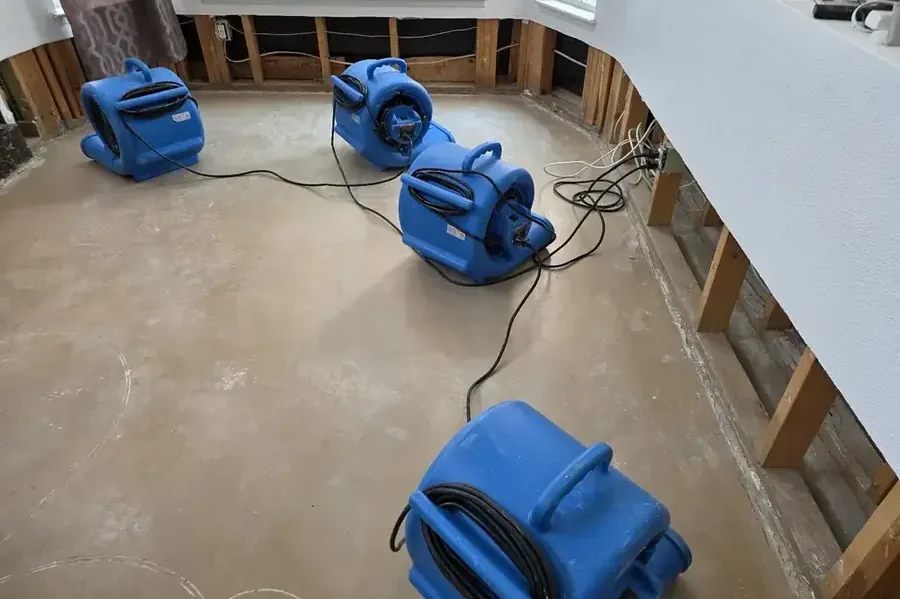
The goal is a small, clean cut rather than a torn out room. Drywall may be removed a short height above the wet edge, and cabinet toe kicks are pulled so air can reach the subfloor. Targeted drying also keeps repair costs lower than demolition would, and the structural drying process then tracks every reading.
What to do before calling
Note the dates you noticed odors, stains or noises, shut off the supply to the suspected fixture, and take photos. The federal leak tips describe simple checks such as a toilet dye test. For wet floors after storms, flood safety advice lists electrical precautions worth following.
Related water damage services in Beaumont
Hidden leak water damage around Beaumont
Crews serve ZIP 92223 across Fairway Canyon, Tournament Hills, Olivewood, Noble Creek Vistas, Sundance and Three Rings Ranch, as well as homes near the Beaumont Civic Center.
The same service nearby: hidden leak water damage in Banning, Calimesa, Yucaipa.
Hidden Leak Water Damage questions
How do I know I have a hidden leak?
Musty odors, soft baseboards, peeling paint and a water meter that spins with every tap closed are common signs.
Can a crew find the leak without cutting walls?
Often, since meters and a thermal camera locate damp areas without cutting. A small opening is still used to confirm what the readings show.
Who repairs the leaking pipe?
A plumber repairs it. The restoration crew dries and cleans the affected materials, and the two visits can be coordinated.
Is a small leak really urgent?
Yes. Slow leaks keep framing and subfloor wet for weeks, which makes the later repair larger and the drying run longer than it would have been.
Will insurance pay for a hidden leak?
Coverage depends on whether the damage was sudden or gradual. Documentation of readings and dates helps the carrier decide.
How much drywall has to come out?
Only the part that stays wet. Many jobs need a small strip near the floor rather than whole walls.
Suspect water behind a wall or cabinet? A moisture check can confirm it.
(888) 563-9619Ask for a moisture checkOdor or stain with no cause? Call now
The crew scans for wet material, marks every damp area and plans the smallest opening that lets drying begin.