Water Extraction in Beaumont, CA
Standing water in a Beaumont home spreads into carpet, pad and baseboards quickly. Crews pump and vacuum it out, lift what cannot be saved, and set drying equipment before the dampness climbs the walls and cabinets. Wet items are moved first.
(888) 563-9619Pull the water out now- Truck mounted pumps
- Carpet and pad lifted
- Moisture mapped
What to do the moment you find standing water
- Step 1Stop the source
Close the main valve or leave the area if the water is rising near outlets.
- Step 2Walk and measure
The crew checks depth, flooring type and how far the moisture has traveled.
- Step 3Pump and extract
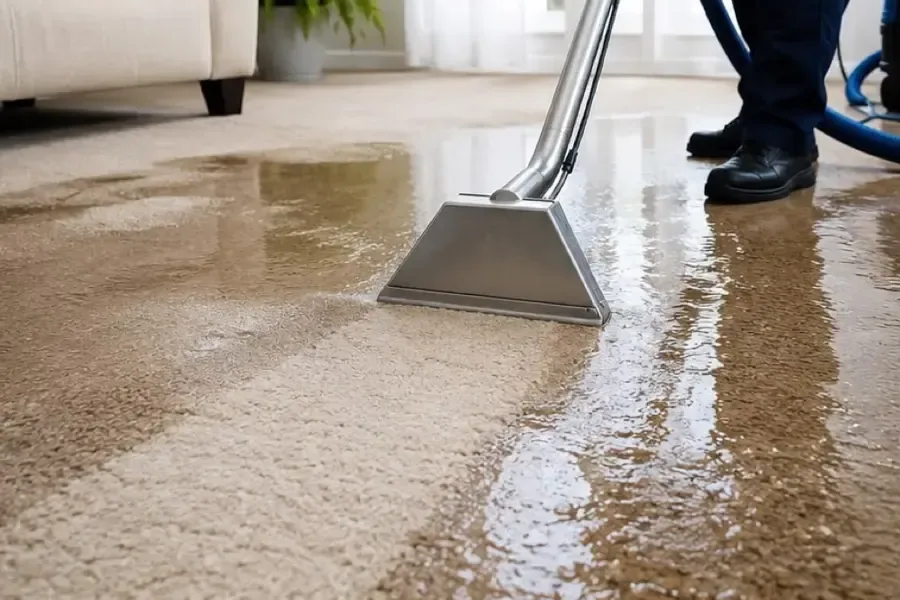
Pumps clear the depth and wand tools pull water out of carpet and seams.
- Step 4Remove and dry
Ruined pad is lifted, then air movers and dehumidifiers take over.
Extraction is the first real step once water gets into a house, because the longer it sits, the deeper it wicks into drywall, cabinets and subfloor. Locally the cause is often a failed pipe or a heavy winter storm, and the job is the same either way: remove the bulk of the water before drying begins. Crews use pumps for depth and wand tools for carpet, then check what remains with meters.
What does water extraction cost in Beaumont, CA?
Most extraction jobs run from $600 to $4,500 or more. One room of clean water sits at the low end, carpet and pad across several rooms costs more, and muddy storm or sewage water costs the most.
- Pump and wand pass done
- Pad lifted if needed
- Dry readings taken and logged
- Pad removed in each room
- Baseboards pulled for airflow
- Longer equipment run
- Silt scooped and bagged
- Surfaces cleaned and treated
- Contaminated items hauled off
The drivers are the water category, the square footage, the material class and how fast drying started. For a planning range, try the water damage cost calculator.
How water extraction is handled in Beaumont
- 1
Walkthrough first
The lead tech reads moisture levels in floors and walls, and notes where water has already traveled past the visible edge.
- 2
Bulk water out
Submersible pumps handle standing depth while wand extractors work along carpet rows, thresholds and closet floors.
- 3
Cut and discard
Saturated pad and soft materials are removed on the spot so they do not keep feeding moisture back into the room.
- 4
Hand off to drying
Equipment is positioned and every reading is recorded so the next visit shows real progress.
The standard behind water extraction
Weighted heads that pull water from deep in carpet.
Move standing depth out of garages and rooms.
Find wet drywall that looks perfectly dry.
Before and after pictures for the claim file.
Why storm water needs a quick pump out
The winter storm of December 14, 2021 closed Beaumont Avenue and Brookside Avenue, and a debris flow reached Cherry Valley. Water and silt from a storm like that can push into garages and ground level rooms. Mud has to leave with the water, so crews pump the thin water first, then scoop and vacuum the sediment before it hardens on flooring.
What gets removed and what stays
Clean supply water often leaves the carpet in place while the pad is lifted and discarded, since pad holds water like a sponge. Hardwood, laminate and tile are handled differently, with mats and suction pulling moisture from the surface and the seams. Anything soaked with sewage or mud is bagged and removed.
- Pumps and wands remove bulk water from carpet, tile and concrete
- Pad, baseboard and soaked insulation are cut out when they cannot dry
- Meters check walls, subfloor and cabinet bases before equipment is placed
What to do before the crew arrives
Shut off the water at the main valve if a pipe is the source, and switch off power to wet rooms at the breaker only if the panel is dry and safe to reach. Move small furniture, lift curtains and put foil under table legs. Take photos first. Federal flood safety advice explains the electrical dangers around standing water.
After the water is gone
Extraction removes most of the liquid but not all of the moisture. Wet subfloor and wall cavities hold the rest, so the crew follows with air movers and dehumidifiers, a step covered under structural drying. Readings are logged each visit until the materials return to normal, and the EPA indoor air quality pages explain why that matters.
Related water damage services in Beaumont
Water extraction around Beaumont
Crews work in ZIP 92223, from Fairway Canyon and Tournament Hills to Olivewood, Oak Valley Greens, Sundance and Three Rings Ranch, plus streets near Interstate 10 and Highway 79.
The same service nearby: water extraction in Banning, Calimesa, Yucaipa.
Water Extraction questions
How fast should water be extracted?
As soon as it is safe. Carpet and pad start absorbing right away, so earlier removal means less lifted flooring and a shorter drying run.
Can carpet be saved after extraction?
Often yes, when the water was clean and the carpet is tacked back down after the pad is replaced and everything is dried properly.
Do you need power for the equipment?
Pumps and dehumidifiers need electricity, though crews bring cords and can run generators when the panel is wet or the power is off.
Is storm water different from pipe water?
Yes. Storm water carries mud and bacteria, so soft items are usually discarded, and surfaces get cleaned before any drying equipment is set.
Will homeowners insurance cover extraction?
Sudden pipe breaks are commonly covered, while flood damage typically is not, so ask your carrier which cause applies before work is scoped.
What should I move before the crew gets there?
Small furniture, rugs, electronics and paper goods. Heavy pieces are blocked up or moved by the crew once walkthrough notes are taken.
How do I know the job is finished?
The crew logs moisture readings against a dry reference, and extraction is considered done once readings stop dropping and drying takes over.
Standing water reaching more rooms? Describe it to a crew today.
(888) 563-9619Describe the standing waterWater in the house? Call for pump out
One call starts pumps, a moisture survey and a written drying plan for the rooms that took on water.