Burst Pipe Water Damage in Calimesa, CA
A burst supply pipe can push gallons into a house every minute. The first move is the home's own shutoff valve, and the crew then removes the water and dries the walls, floors and ceilings that the spray and runoff reached.
(888) 563-9619Report the burst pipe- Valve shutoff first
- Walls and ceilings dried
- Moisture mapped
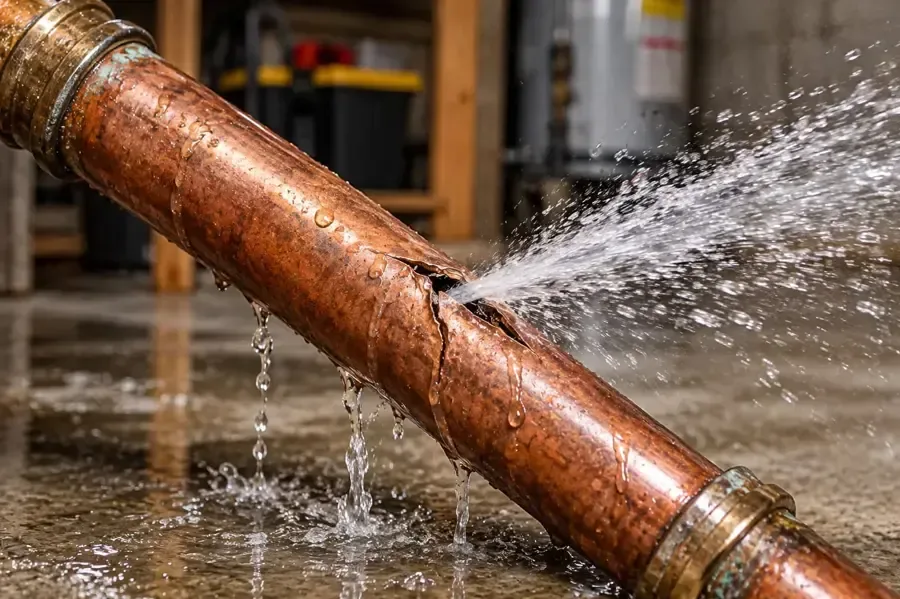
What to do the moment you find a burst pipe
- Step 1Shut off the supply
The home's main valve is closed and a low faucet opened so the pipes drain and the spray stops.
- Step 2Remove the standing water
Extractors clear the floors, and ceilings holding water are punctured so the weight can drain safely.
- Step 3Map the wet path
Meters and a thermal camera trace water through walls, floors and ceilings to every damp surface.
- Step 4Open and dry
Wet drywall and insulation are cut out as needed, then air movers and dehumidifiers run until readings settle.
In a home served by South Mesa Water Company or Yucaipa Valley Water District, a burst pipe inside the house is stopped at the home's own shutoff valve, not at the street. Until that valve is closed, water keeps spraying into insulation, drywall and flooring, so finding it comes before everything else.
What does burst pipe water damage cost in Calimesa, CA?
Caught fast, one room is the lowest tier, and cost rises with each wall, floor and ceiling the water reached. The top tier covers two levels with ceiling work. A pipe that ran for a long time while nobody was home usually lands higher, because more materials end up soaked.
- Valve shutoff, extraction and photos
- A short drying run with fans
- Moisture readings at each visit
- Wall cavities opened where wet
- Extra air movers
- Daily monitoring visits
- Ceiling drywall replaced
- Insulation removed
- Extended dry-out
The drivers are the water category, the square footage, the material class and how fast drying started. For a planning range, try the water damage cost calculator.
How burst pipe cleanup is handled in Calimesa
- 1
Shutoff and safety
The crew checks the valve is closed and the power is safe around wet outlets before any equipment is plugged in.
- 2
Extraction and relief
Standing water is pulled from floors, and bulging ceilings are opened at the lowest point so water can drain.
- 3
Scoping the cavity
A moisture map decides which drywall, insulation and baseboards are cut out and which can stay.
- 4
Drying and recheck
Equipment is placed to move air through the open cavity, and readings are logged until each material is dry.
The standard behind burst pipe cleanup
The first fix, closing the home's main supply, stops new water entering.
Moisture meters show wetness behind paint and under flooring.
They push dry air across wet studs and floors.
Large units pull vapor out of the air as the cavity dries.
Stopping the flow safely
Most houses have a main shutoff near where the supply enters, and a second valve under many sinks and toilets. Turn the main handle fully, then open a low faucet to drain what remains in the pipes. If the ceiling is sagging with water, stay out of that room and keep power off nearby.
- Close the main valve and open a low faucet
- Switch off breakers serving wet rooms
- Photograph the split before anything is moved
Where the water travels
A burst inside a wall rarely stays inside it. Water runs down the cavity, soaks the bottom plate and slides under flooring into the next room. Pipes in an attic or upper floor can drop water through two ceilings. A meter sweep after extraction shows the full wet path, which is often larger than the stain suggests.
Drying walls and ceilings
Once the standing water is out, the wet cavity is opened enough to let air move, and air movers and dehumidifiers run until the framing reads normal. The structural drying page explains the equipment, and federal advice on fixing leaks helps with the plumbing repair that follows. A plumber replaces the failed section while the dry-out continues.
When it becomes a bigger loss
If the pipe ran while nobody was home, water extraction comes first, and federal flood safety advice covers electrical and slip hazards in a soaked house.
Related water damage services in Calimesa
Burst pipe water damage around Calimesa
Serves ZIP 92320 and the neighborhoods in it, including JP Ranch Development, the Downtown Business District and homes along Bryant Street and County Line Road, near the foothills and Interstate 10.
The same service nearby: burst pipe water damage in Banning, Yucaipa, Beaumont.
Burst Pipe Water Damage questions
Where is the shutoff valve in a house?
Most homes have a main shutoff near where the supply enters, often at an outside wall, garage or utility area. The homeowner can close it without calling anyone.
Can a burst pipe be dried without tearing out walls?
Sometimes. Small holes or removed baseboards can let a cavity dry, but long soaking, insulation or swollen drywall means that section has to come out.
Is burst pipe water clean?
It starts as clean supply water, but after sitting in carpet or insulation for a while it picks up soil and bacteria and is treated with more caution.
How long before damage becomes permanent?
Drywall and wood begin to swell and stain quickly. Prompt extraction and drying keep most materials usable, while neglected leaks often mean replacement.
Who fixes the pipe itself?
A plumber repairs the pipe. The restoration crew handles water removal and drying, and the two jobs can run at the same time.
Will insurance cover a burst pipe?
Sudden pipe bursts are commonly covered, but terms differ by policy. Photos and moisture records help the claim, and the insurer makes the final decision.
What if the water ran in an empty house?
The wet area is usually larger, since water spread for a long time. The crew maps every room, removes ruined materials and dries what can be saved.
Pipe still spraying? Talk to the crew while you reach the valve.
(888) 563-9619Calimesa burst pipe helpShut it off, then dry it right
Standing water and wet walls get worse with time. A call lines up extraction and drying around the plumber's repair.