Roof Leak Water Damage in Calimesa, CA
A roof leak lets rain into the attic and then the ceiling. Once the roof is covered, the crew removes the soaked insulation and drywall below it, then dries the framing so the attic does not stay damp after the storm.
(888) 563-9619Report the roof leak- Attic and ceiling dried
- Wet insulation removed
- Framing checked
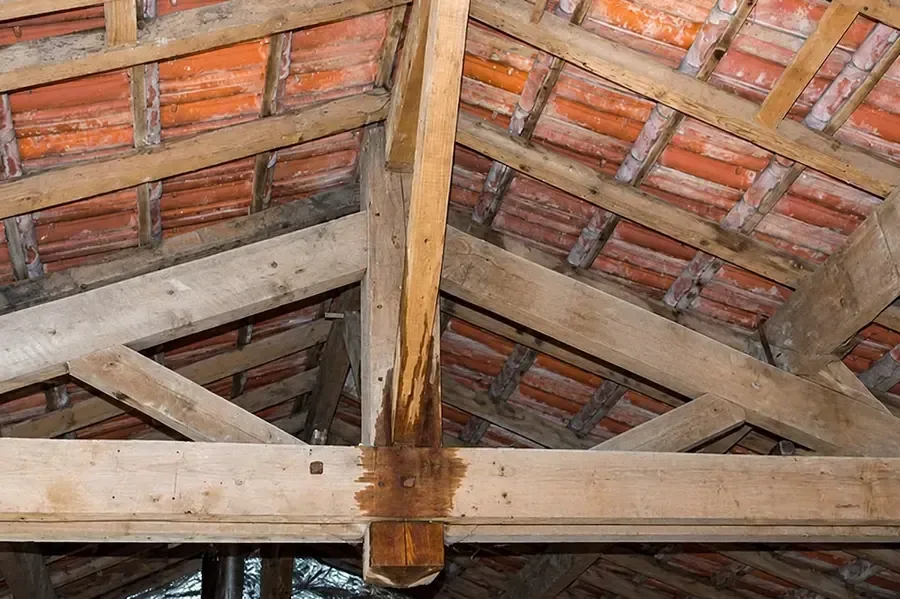
What to do the moment you find a roof leak
- Step 1Cover the roof
The opening is covered or tarped so rain stops entering, and the attic is checked for safe access.
- Step 2Remove wet insulation
Soaked batts and blown insulation are bagged and taken away so the rafters can start to dry.
- Step 3Cut back the ceiling
Softened drywall is removed and trapped water released, with the floor and furniture below protected.
- Step 4Dry and recheck
Air movers and dehumidifiers dry the attic and rooms below, and readings steer the final close-out.
Rain finds the weak spot in a roof and runs along rafters before it shows up on a ceiling. By the time a stain appears below, the attic insulation has often absorbed a lot of it. The first step is covering the roof opening so more rain stays out, and the second is drying everything that already got wet. Most roof leaks start at a flashing, a cracked tile or a worn seam, and a roofer decides the permanent repair.
What does roof leak water damage cost in Calimesa, CA?
One ceiling after a first storm sits in the lowest tier. Wide attic wetting costs more, and leaks that went on through several storms reach the top tier because the damage spread into several rooms and wall tops. Every storm adds to the figure, so early calls cost less, and a covered roof stops the number from growing.
- Attic insulation removed and bagged
- Ceiling dried in place if firm
- Moisture mapping
- Insulation removed across the attic space
- Ceiling sections cut out
- Daily readings
- Drywall in several rooms replaced
- Longer equipment run
- Wall tops dried out
The drivers are the water category, the square footage, the material class and how fast drying started. For a planning range, try the water damage cost calculator.
How roof leak drying is handled in Calimesa
- 1
Cover and secure
The roof opening is covered and the attic checked for hazards before anyone enters with equipment.
- 2
Strip the wet layers
Insulation and drywall that stayed wet are removed, because they hold water against the framing.
- 3
Dry the attic and ceilings
Equipment is placed to move air through the open attic and across the exposed ceiling joists, so the wood can return to its normal moisture level.
- 4
Check and close
Readings are logged and shared with the roofer and the drywall crew before anything is sealed again.
The standard behind roof leak drying
They keep more rain out until the roofer finishes.
They find wet framing in a closed attic.
It shows damp insulation from below.
They dry rafters, joists and ceiling edges.
Where roof water goes
Water follows the path of least resistance: down a rafter, across a ceiling joist or along a duct. It may come out several feet from the actual leak, so the stain is a poor clue to the entry point.
- Along rafters and into insulation
- Down the sides of wall tops
- Onto ceilings far from the entry point
Why the attic matters
Insulation holds water and takes a long time to dry, while wet wood framing can stay damp inside a closed attic. Opening and airing the space speeds drying, and a moisture map shows how far the rain traveled along the framing. Insulation that stayed wet is removed and replaced, because it loses its value once soaked and can keep the ceiling wet.
Cover first, then dry
A temporary cover or tarp keeps further rain out until a roofer completes the repair, and it should stay in place through the dry-out. Keep an eye on the ceiling during the next rain, since a missed second leak restarts the problem. Then the crew removes wet insulation, cuts back softened drywall and sets drying equipment. Read the ceiling leak page for the ceiling side, the federal flood safety advice for storm safety, and the federal leak advice for spotting small leaks early.
Related water damage services in Calimesa
Roof leak water damage around Calimesa
The crew covers ZIP 92320, including houses in the foothills, along Bryant Street and Calimesa Boulevard, near Interstate 10, and on Myrtlewood Drive and Avenue L in town.
The same service nearby: roof leak water damage in Banning, Yucaipa, Beaumont.
Roof Leak Water Damage questions
Does the roof have to be fixed before drying starts?
The opening has to be covered so rain stops entering. A temporary cover is enough to begin drying, and the permanent repair follows.
Why is the stain far from the leak?
Water runs along rafters and ceiling joists before it drips. The point where it appears can be a long way from where it entered.
Can wet attic insulation be saved?
Usually not. Wet insulation holds water and loses its value, so it is removed and replaced once the framing is dry.
Will drywall need to be replaced?
Softened or sagging drywall is cut out and replaced. A light stain on firm drywall may dry in place and be repainted.
Who handles the roof repair?
A roofer. The restoration crew covers the opening, removes wet materials and dries the structure, and the two jobs are coordinated.
What if rain keeps coming?
The cover keeps rain out, and the drying equipment keeps working in the attic. Readings show whether moisture is still entering.
Does insurance cover a roof leak?
Often when the cause is sudden, such as storm damage, but not when wear is the cause, and terms differ. Photos and records help the insurer.
Rain coming through the ceiling or attic? Tell the crew where.
(888) 563-9619Tell the crew about the leakDry the attic after the rain
Wet insulation keeps the ceiling damp long after the rain stops. A call gets removal and drying planned around the roofer's repair.