Roof Leak Water Damage in Yucaipa, CA
After a dry summer, the first heavy storms of winter find every weak spot in a roof. Water that gets in soaks insulation and drywall long before a stain tells anyone.
(888) 563-9619Call about the leaking roof- Attic checked
- Wet insulation removed
- Ceilings dried
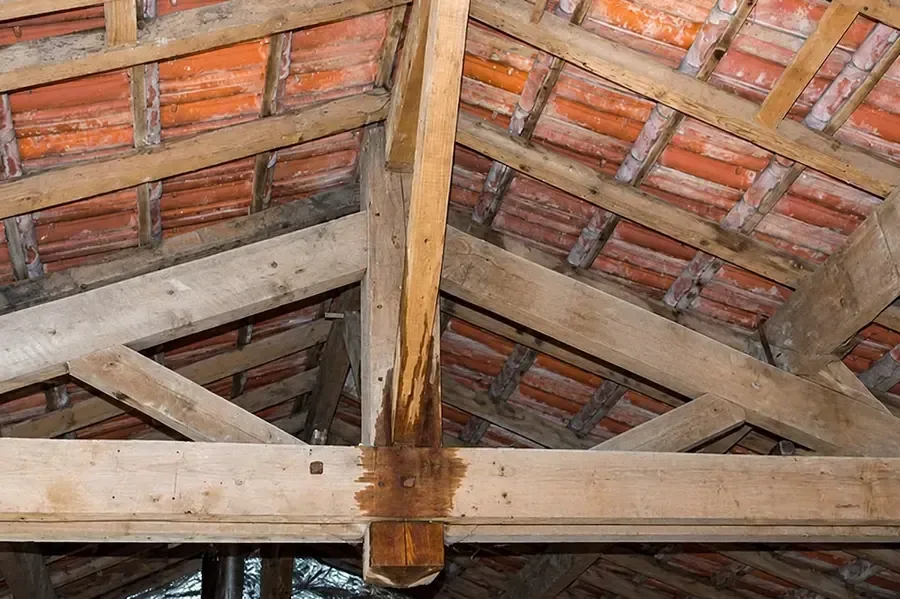
What to do the moment you find a roof leak
- Step 1Protect the room
Move belongings, catch drips with buckets and keep out of any sagging ceiling.
- Step 2Check the attic
The crew meters rafters, sheathing and insulation to find how much water entered.
- Step 3Remove and dry
Wet insulation and weak drywall are removed, and air movers dry the attic and rooms.
- Step 4Report to the claim
Dated photos and dry readings go to your insurer and your roofer.
A leaking roof damages the house from the top down. Water crosses the sheathing, soaks insulation, then drips onto the ceiling and walls below. The roofer repairs the opening, but the wet materials inside still need to be removed and dried by a restoration crew. Leaving the interior wet while the roof is fixed is how small leaks become rotted rafters and stained ceilings.
What does roof leak water damage cost in Yucaipa, CA?
Roof leak drying typically costs $1,000 to $7,500+. One ceiling after a single storm is the least costly, wide attic wetting costs more, and several rooms affected over a whole season can climb to the top of the range, so early drying saves the most money. The final figure follows a meter walk through of the attic and ceilings.
- Attic checked and metered
- Small wet area dried
- One round of readings
- Insulation removed in bulk
- Ceiling sections opened
- Several days of drying
- Multiple ceilings and walls
- Larger demolition and disposal
- Extended drying and reports
The drivers are the water category, the square footage, the material class and how fast drying started. For a planning range, try the water damage cost calculator.
How roof leak drying is handled in Yucaipa
- 1
Walk the attic
The crew follows stains up to the sheathing and checks rafters, insulation and the ceiling below with meters and a thermal camera.
- 2
Remove soaked layers
Wet insulation and weak drywall are bagged out so they stop holding water against the framing and the ceiling.
- 3
Dry the structure
Air movers and dehumidifiers run through the attic and rooms, with moisture readings taken every day until they are normal.
- 4
Coordinate the repair
Findings are shared with the roofer so the opening is sealed and the dry house can be rebuilt without hidden moisture.
The standard behind roof leak drying
Read rafters and sheathing for trapped water.
Shows wet insulation without opening the ceiling.
Move air through attics and wall cavities.
Show the stain pattern and water path for the roofer.
Why the first storms matter
June through September each average under half an inch of rain in Yucaipa, so roofs go for months without being tested. When the first heavy winter storms arrive, cracked flashing, loose shingles and dried out seams are exposed all at once, and leaks often appear in several rooms the same week. A stain on the ceiling may sit well away from the failed spot, because water runs along rafters before it drops through the drywall.
What gets wet in a roof leak
- Attic insulation soaks up water and keeps the drywall below damp for days.
- Rafters and sheathing hold moisture that needs air movement to leave, and old stains show where earlier leaks happened.
- Ceilings and upper walls stain, bubble and can later sag.
Dry the house, then repair the roof
A roofer or tarp stops further entry. The restoration crew then removes wet insulation, opens weakened ceiling sections, runs air movers and dehumidifiers through the attic and rooms below, and keeps moisture readings on file. The report helps the roofer see where water entered. Readings are repeated each visit, and equipment stays until the attic framing and the ceilings below match the dry reference.
Do not wait for the next storm
Leaving wet insulation in place invites decay and odors. If the water has already collected above a ceiling, read about ceiling leak drying, and keep photos of the roof, the attic and every stain, because a clear record of when the water arrived and how it spread helps with both the roof repair and the insurance claim.
Related water damage services in Yucaipa
Roof leak water damage around Yucaipa
Roof leak drying covers ZIP 92399 across Yucaipa, including Wildwood, North Bench, Oak Glen, Mentone and Cherry Valley, around the clock and on every day of the week.
The same service nearby: roof leak water damage in Banning, Calimesa, Highland.
Roof Leak Water Damage questions
Can a roofer fix the whole problem?
A roofer seals the opening. The wet insulation, drywall and framing inside still need removal and drying.
Why do leaks show up after a dry summer?
Seals and flashing dry and crack over months of heat, and the first heavy rain finds those weak spots.
Is attic insulation safe to leave wet?
No. Wet insulation holds water against the ceiling and invites decay, so it is removed and replaced.
How long until the ceiling is dry?
A few days for light wetting. Wider attic soaking takes longer, and readings decide the finish.
Will insurance cover storm roof leaks?
Storm damage is often covered, while wear is not. Photograph the roof, attic and stains and ask your carrier.
Should I tarp the roof myself?
Climbing a wet roof is dangerous. Leave tarping to a roofer and keep the buckets and photos inside.
Can leaks cause damage far from the hole?
Yes. Water runs along rafters and drops into a ceiling that is far from the opening, so the whole path is checked.
What should I photograph?
Take pictures of the roof from the ground, the attic, each stain and any damaged belongings, with dates if possible.
Rain coming through the roof or stains spreading? Describe the damage.
(888) 563-9619Ask about roof water damageDry the attic after the storm
Storm water that gets past a roof keeps soaking insulation and drywall until it is removed, so early drying limits the rebuild.