Roof Leak Water Damage in Highland, CA
Storm water that gets past the roofing soaks the attic, then the ceiling, then the walls. The crew tracks it layer by layer and dries every surface it touched, leaving the roofer to close the opening.
(888) 563-9619Get the attic water dried- Attic and rafters
- Ceilings dried
- Storm leak mapping
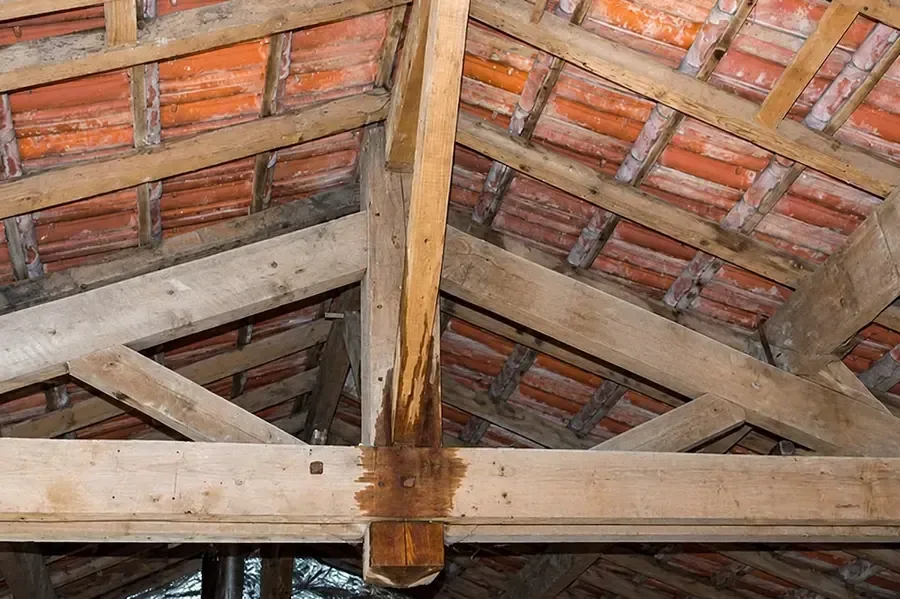
What to do the moment you find a roof leak
- Step 1Inspect the attic
The crew reads rafters, decking and insulation to locate the wet path from the roof.
- Step 2Remove wet material
Soaked insulation and softened ceiling board are removed and bagged.
- Step 3Dry the layers
Air movers and dehumidifiers dry attic framing, ceiling cavity and wall tops.
- Step 4Record the path
Photos and readings show the roofer and adjuster how far the water traveled.
The city sits at the base of the San Bernardino Mountains, and storms that stall against the slope can drop rain for days. Six straight days of rain in December 2010 tested every roof in the area. A roof that handles a light shower can still let water in when rain is hard, wind driven or constant, and the first sign inside is usually a ceiling stain far from the real opening.
What does roof leak water damage cost in Highland, CA?
A roof leak that stains one ceiling after the first storm often costs $1,000 to $2,500. Wide attic wetting runs $2,500 to $5,000, and leaks that continued through several rooms over time can reach $7,500 or more. Tile roofs and older flashing can leak in more than one place at once.
- Attic checked for the wet path
- One ceiling dried
- Insulation lifted over the stain
- Insulation removed widely
- Rafters and decking dried to target
- Ceiling sections cut and bagged
- Walls and ceilings opened
- Flooring checked below
- Extended drying schedule
The drivers are the water category, the square footage, the material class and how fast drying started. For a planning range, try the water damage cost calculator.
How roof leak drying is handled in Highland
- 1
Trace from inside
Ceiling stains lead the crew into the attic, where wet insulation and dark decking show the path the storm water took.
- 2
Clear the soaked layers
Insulation and ceiling board holding water are removed first, because they keep the framing wet long after the rain stops.
- 3
Dry the structure
Equipment is placed in the attic and the rooms below, and meter readings are repeated until framing returns to a normal level.
- 4
Coordinate and finish
The roofer closes the opening, the crew confirms dryness, and a written record of the loss goes to the owner.
The standard behind roof leak drying
Pulls wet insulation out of tight spaces.
Reads rafters and decking for stored water.
Hold back water while the roofer works.
Shows wet insulation from the attic floor.
How roof water travels indoors
Water enters at a cracked tile, a lifted flashing or a failed seam, then runs along the decking and rafters until it finds a low spot. It soaks insulation, drips onto the ceiling and moves down walls. Because the entry and the stain rarely match, the attic is inspected first and the ceiling second.
- Rafters and decking are metered for moisture before anything is removed
- Insulation that holds water is vacuumed out and bagged
- Ceiling board that has softened is cut back to solid material
Working with the roofer
The drying crew does not repair roofing. A roofer finds and closes the entry, and the two schedules are coordinated so tarps and repairs are in place while drying equipment runs. Meter photos help the roofer and the adjuster understand how much of the roof system leaked. See ceiling leak work for the room below.
Storm readiness
Checking flashing and tiles before the rainy season avoids many leaks. The national weather service flood page lists warnings worth watching, and the federal home energy saving pages cover attic insulation and ventilation once the roof is dry again. Gutters and downspouts that carry water away from the roof edge deserve a look at the same time.
Related water damage services in Highland
Roof leak water damage around Highland
Roof leak drying covers Highland ZIP code 92346, including foothill homes near Mountain Shadows and Greenspot, houses in East Highlands and older roofs around the Palm Avenue historic district.
The same service nearby: roof leak water damage in Banning, Yucaipa, Calimesa.
Roof Leak Water Damage questions
How long after a storm can a roof leak show?
A stain may appear within a day, but water can sit in the attic for days before a ceiling shows it.
Does attic insulation have to be replaced?
Insulation that soaked up water rarely dries well, so it is usually removed and replaced after the structure is dry.
Who fixes the roof opening?
A roofer. The drying crew removes water and dries the structure while the roofer repairs and covers the roof.
Is a roof leak covered by insurance?
Storm damage is often covered, but wear and neglect may not be. The policy decides, so photos and readings matter.
Can a leak damage framing in the attic?
Yes. Long leaks soften decking and rafters, so those are metered and checked as part of the work.
Will the ceiling need to be replaced?
Only sections that soaked or sagged. Dry, solid board with a stain can often be sealed and painted later.
Should anything be done before the crew comes?
Move belongings, catch drips and photograph the stains. Avoid climbing on a wet roof or into a wet attic.
Storm water dripping from the ceiling?
(888) 563-9619Ask about the roof leakDry the attic and rooms below
Roof water keeps soaking insulation after the rain stops, so a call now lets the crew start drying before the ceiling gives way.