Water Extraction in Highland, CA
Deep water, soaked carpet and flood mud all come out before they can wick into walls. A crew brings pumps and extractors to the house and keeps going until the surface water is gone and the drying plan is ready to start.
(888) 563-9619Get pumps to the flooded rooms- Pumps and wands
- Mud and silt removal
- Carpet and pad lifted
What to do the moment you find standing water
- Step 1Assess the water
The crew checks depth, the water type and any electrical risk before a pump goes in.
- Step 2Pump the deep water
Submersible pumps clear the bulk of the standing water from floors and low spots.
- Step 3Extract carpet and pad
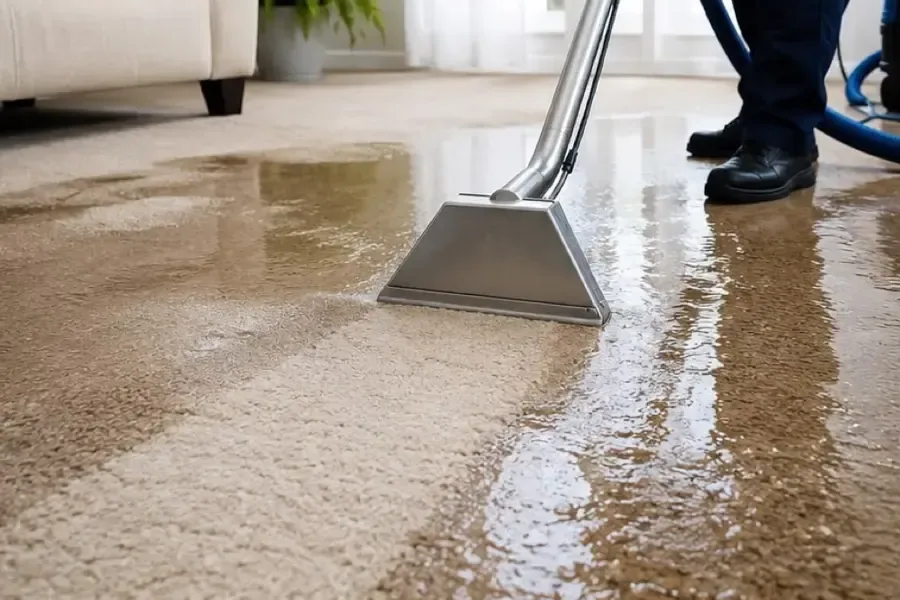
Weighted wands pull moisture from carpet, and ruined pad is cut out and bagged.
- Step 4Meter and hand off
Moisture readings show what is still wet, and the drying plan starts from them.
Extraction is the first real job after a flood or a failed pipe, because water left on the floor keeps moving into padding, baseboards and the subfloor. Creek flooding in December 2010 pushed water and mud into east Highland homes, which is why heavy extraction gear matters here as much as drying fans. The goal is simple: get the bulk of the water out as a liquid, before it has to be dried out of the structure as vapor.
What does water extraction cost in Highland, CA?
Extraction alone usually runs from $600 for one room of clean water to $4,500 or more when muddy storm or sewage water is involved. Depth, water type and floor area move the number most.
- Pump or wand pass over the room
- Wet pad lifted and bagged
- Meter readings recorded
- Carpet floated in each wet room
- Pad removed throughout
- Subfloor metered before reset
- Mud shoveled and rinsed out
- Contaminated materials removed
- Surfaces sanitized afterward
The drivers are the water category, the square footage, the material class and how fast drying started. For a planning range, try the water damage cost calculator.
How water extraction is handled in Highland
- 1
Safety walkthrough
Power, gas and slip hazards are checked first, and anything that could shock a worker is isolated before equipment enters the water.
- 2
Bulk water removal
Pumps handle depth while truck mounted extractors work the carpet, so the volume of water leaves the building without spreading further.
- 3
Pad and debris out
Soaked pad, silt and damaged baseboards are cut away and hauled off, which opens the floor so the subfloor can start drying.
- 4
Final readings
Meters run over floors and lower walls, and any wet areas flagged here become the targets for the next phase of drying.
The standard behind water extraction
Submersible units move deep water through hoses to the outside.
Weighted heads pull water up through carpet fibers and pad.
Hard floors and tile get water pushed toward pump points.
Strong vacuum power stays outside while hoses run into the house.
How standing water is removed
Crews start with a submersible pump for deep water, then switch to truck mounted or portable extractors with weighted wands for carpet and pad. Hard floors get squeegee tools and wet vacuum heads. Lifting carpet at a corner lets the pad be pulled and the subfloor checked.
- Carpet is floated or lifted so water trapped under the pad can be reached
- Pad that soaked up contaminated water is cut out and discarded
- Subfloor and baseboards are metered before any drying gear is placed
Water that carries mud and debris
Runoff from City Creek, Plunge Creek or Small Canyon Basin arrives as gray or black water loaded with silt. That water is treated as contaminated, so porous items it touched are removed, hard surfaces are rinsed and sanitized, and the structure is dried only after the muck is gone. Skipping that cleanup traps odor and bacteria behind new drywall.
What happens after the water is out
Extraction rarely finishes the job alone. Walls and flooring still hold moisture, so the crew moves straight to structural drying with air movers and dehumidifiers. Safe re-entry advice is published as federal flood cleanup guidance, and basic flood safety steps cover power and wading hazards.
Related water damage services in Highland
Water extraction around Highland
Extraction crews work across Highland ZIP code 92346, from the Palm Avenue historic core to East Highlands, Greenspot and the Mountain Shadows streets below the foothill basins.
The same service nearby: water extraction in Banning, Yucaipa, Calimesa.
Water Extraction questions
How deep can water be before pumps are needed?
Any standing water that a wet vacuum cannot keep up with calls for a submersible pump. Even an inch over a whole room counts, because the volume adds up.
Is carpet always removed after a flood?
Not always. Clean water carpet can often be dried in place, but padding usually goes, and carpet that soaked up gray or sewage water is discarded.
Can water be extracted from hardwood?
Yes, with special mats and low pressure suction, though the boards may cup later. Early extraction improves the odds that the floor can be saved.
What happens to muddy water from a creek flood?
It is treated as contaminated, so crews wear protective gear, remove silt and soaked porous items, and sanitize what remains.
Do extraction and drying come as separate visits?
Usually they follow each other directly. Extraction removes the liquid, and drying equipment goes in right after so walls and subfloor start losing moisture.
Does extraction affect the insurance claim?
Photos and meter readings from the extraction visit show the water level and affected rooms, and adjusters use them to confirm the scope of the loss.
Is it safe to walk through standing water?
Not until power to that area is off, because outlets, cords and appliances can energize the water. The crew checks that before entering.
Standing water in the house and unsure where to start?
(888) 563-9619Ask about the pumpsGet the floodwater out
Standing water damages more of the house with each passing hour, so one call to the dispatcher starts pumps and a crew moving.